
What Are the Best Types of Sectional Garage Doors?

Choosing among sectional garage doors means balancing insulation, durability, appearance, and available headroom. A door may look ideal in a showroom yet feel wrong beneath a low ceiling. Details matter: steel thickness, panel construction, track layout, and weather seals all affect everyday use. So does the garage itself.

The 2024 Cost vs. Value report from Zonda and Remodeling estimated a national average cost of $4,513 for garage door replacement and a resale value of $8,751. That represents a reported 194% cost recoup, not a guaranteed return or a comparison of door designs. It is useful context, but easy to overread. The report does not tell homeowners which sectional door best suits their climate, budget, or opener.

DASMA’s technical guidance on residential garage door systems offers a more practical lens: door construction and installation conditions should be considered together. This guide compares common options, including non-insulated steel, insulated steel, aluminum, and wood-look designs, while noting where each may fall short. A thicker insulated panel can improve thermal performance, but it may cost more and still leave drafts around poorly sealed edges. The best choice is rarely the fanciest one. It is the door that fits the opening, handles local weather, and works reliably day after day. Before deciding, measure carefully and ask an experienced installer to assess the tracks, spring system, and clearance. That step is easy to skip—and worth reconsidering.
What Are the Best Types of Sectional Garage Doors?

How Sectional Garage Doors Are Built and Operate

What Are the Best Types of Sectional Garage Doors?

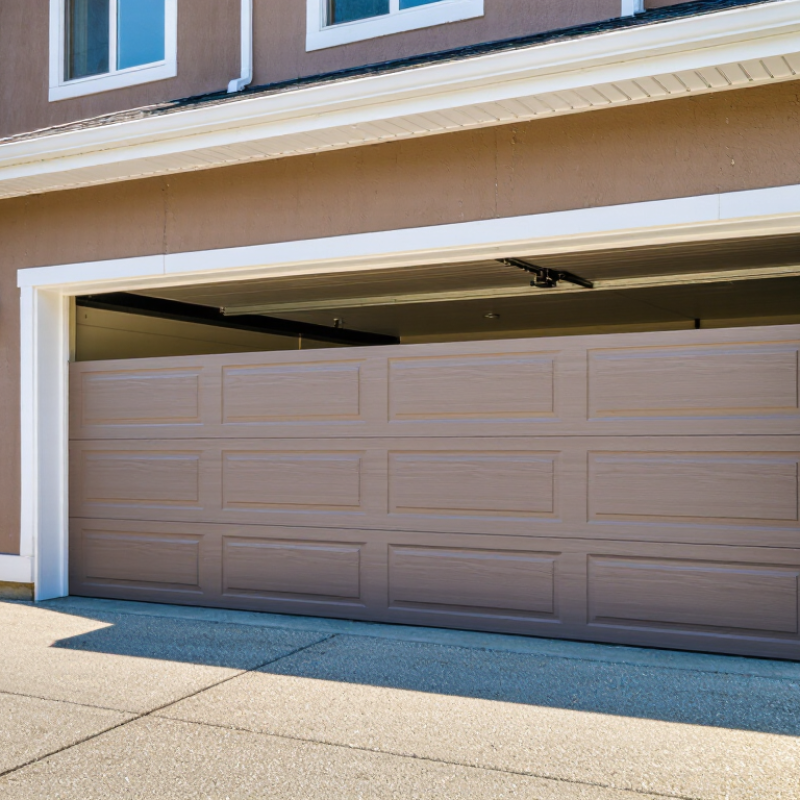
A sectional garage door is made from several horizontal panels joined by hinges. Small rollers at the panel edges move inside metal tracks fixed beside the opening. As the door rises, it travels vertically, follows a curved section, then rests horizontally beneath the ceiling. No wide swing into the driveway.

The panels may be steel, aluminum, timber, or composite, with insulation added to some designs. Flexible seals along the bottom and sides help limit drafts, dust, and rain. Above the opening, a torsion spring usually counterbalances the door; other systems use extension springs beside the tracks. The springs store substantial force. That matters. Cables and rollers transfer the balanced movement, while an opener pulls the door along its path. Photoelectric sensors near the floor can stop or reverse closing when something crosses the beam.

It is easy to judge a door by its surface and overlook the space needed overhead. Track layout, ceiling clearance, panel weight, and local weather all affect the practical choice. An insulated panel may improve comfort, but it cannot fix a poorly sealed frame. I would check the fit before comparing finishes; that detail is less exciting, and easy to miss. Keep the tracks clear and watch for uneven movement or unusual noise. Spring adjustment is not a casual repair, since stored tension can cause serious injury.

What Main Types of Sectional Garage Doors Are Available?

Sectional garage doors are commonly configured as standard-lift, low-headroom, high-lift, or vertical-lift systems. Each uses hinged panels that travel on tracks, but the track path changes how much ceiling space the door needs. Standard-lift suits many typical garages: the panels curve from vertical to horizontal above the opening. Low-headroom hardware helps when the ceiling sits close to the top of the door. High-lift tracks raise the door farther before turning inward, leaving more room for a vehicle lift or overhead storage. Vertical-lift doors travel straight upward, but need substantial ceiling height.

Measure carefully. A few inches matter. Check the ceiling, opener position, lights, beams, and ductwork before choosing. DASMA’s technical guidance on garage-door systems is a useful reference for installation conditions; a qualified installer can verify track clearances on site. The distinctions can be easy to overlook, and a neat-looking plan may still miss an obstruction.

Tips: Take photos of the ceiling and measure from the opening to the nearest obstruction.

For context, Remodeling magazine’s 2024 Cost vs. Value report, produced with Zonda, estimated a 194% cost recoup for an upscale garage-door replacement. That figure reflects a U.S. remodeling estimate, not a promise of savings or proof that one track type is better. Decide based on clearance, use, and operating needs.

How Door Materials Affect Durability and Insulation

A sectional door’s skin is only part of its thermal story. ASHRAE Handbook—Fundamentals tables put steel’s conductivity near 50 W/(m·K) and aluminum’s near 200; both transfer heat readily. USDA Forest Products Laboratory’s Wood Handbook reports much lower conductivity for wood, roughly 0.1–0.2 W/(m·K), depending on species and moisture. These are material figures, not whole-door ratings.

For steel doors, a continuous polyurethane or polystyrene core can slow heat transfer, while aluminum usually needs an insulated core to improve thermal performance. Wood panels offer useful natural resistance, but dampness and seasonal swelling can affect fit. That is easy to overlook. Insulation also cannot compensate for compressed, cracked perimeter seals or gaps between sections. Small gaps matter.

Compare tested whole-door R-values, not just panel-core claims, and check how the rating was measured. A sectional door has joints, tracks, and a frame; each can create a weaker point than the center panel. If the garage shares a wall with living space, inspect the seal along the floor on a cold day. A bright sliver of daylight is a practical warning, though not a thermal test. Even good figures deserve a reality check.

Which Features Matter Most When Comparing Door Types?

When comparing sectional garage door types, start with the opening and the room around it. A standard lift needs clear ceiling space for horizontal tracks. Low headroom tracks can help, but they may require different hardware. Measure the opening, ceiling, and nearby lights before choosing. Small obstructions matter.

Material affects upkeep, weight, and insulation. Steel is practical and often available with insulated cores; check panel construction and seals, not just advertised insulation values. Aluminum is lighter and resists rust, though thin panels can dent. Wood offers a distinctive finish but needs regular attention to moisture and paint. Composite panels may reduce some upkeep, but performance varies by construction. There is no perfect choice.

Consider climate, noise, and daily use. Insulation can make a difference when the garage shares a wall with living space, but a well-sealed door matters too. Ask how hinges, rollers, and springs are rated, and whether replacement parts are readily available. Safety sensors and balanced springs deserve more attention than decorative windows. A technician can assess the opening and track clearances; an uneven floor or aging frame may change the recommendation. One detail is easy to miss: darker finishes can feel hotter in direct sun. Compare samples outside, if possible.

Best Types of Sectional Garage Doors: Which Features Matter Most?

Compare common door materials by insulation potential, durability, low-maintenance needs, and design flexibility.

How to read this: Ratings are indicative relative scores from 1 (lower) to 5 (higher), based on typical material characteristics—not laboratory measurements. Insulation and durability vary considerably with door construction, finish, climate, and installation.

How to Choose a Sectional Garage Door for Your Garage

Choosing a sectional garage door starts with the opening, not the finish. Measure its width and height, then check the space above the opening and beside the tracks. Low ceilings, beams, or pipes may limit which track arrangement will fit. Measure twice. If the opening is uneven, have an installer assess it before ordering.

Think about insulation, too. An insulated steel door can help moderate temperatures in an attached garage, while a lighter aluminum door may suit a wide opening where weight matters. Wood offers a distinctive look, but it needs regular care, especially in damp weather. No material is perfect. Consider how much maintenance you will realistically do, not just how the door looks in a showroom.

Check the door’s weight against the opener’s capacity, and ask about balanced springs, pinch-resistant panels, and obstruction sensors. Windows can bring daylight into a dim garage, though their placement affects privacy and insulation. A door that suits a mild climate may feel inadequate where winters are harsh. One easy mistake is choosing by appearance alone. Compare the door’s documented insulation rating, warranty terms, and installation requirements, then confirm that the model fits your measurements and daily use.

What Are the Best Types of Sectional Garage Doors? — How to Choose a Sectional Garage Door for Your Garage
Door Type Typical Construction Insulation and Temperature Control Durability and Maintenance Best Suited For Points to Consider
Non-insulated steel Steel sectional panels without an insulating core. Provides little thermal resistance; the overall door performance depends on its construction and seals. Generally low maintenance. The finish can be scratched or dented, and damaged coatings may need attention to help prevent corrosion. Detached garages, mild climates, and spaces that do not need substantial temperature control. Often a practical, economical choice. It may transmit more outdoor noise and temperature changes than an insulated door.
Insulated steel Steel panels with an insulating core, commonly polyurethane or polystyrene. Offers better thermal performance than non-insulated steel. Check the stated R-value and whether it applies to the complete door assembly. Usually durable and relatively easy to care for. Panel construction, finish quality, and weather seals affect long-term performance. Attached garages, homes in hot or cold climates, and garages used as workshops or storage areas. Compare insulation ratings, panel construction, perimeter seals, and the door’s weight to ensure the opener and springs are correctly matched.
Aluminum or glazed-panel Aluminum-framed sectional panels, sometimes fitted with glass or other translucent inserts. Performance varies widely. Glass type, frame design, and any insulated glazing affect heat transfer and condensation. Aluminum resists rust, but frames can dent. Glazing may require regular cleaning and careful handling. Contemporary home designs, garages where natural light is valued, and mild climates. Consider privacy, glazing safety, solar heat gain, and insulation needs. More glass generally means less privacy unless an appropriate finish is selected.
Solid wood Sectional panels made from solid wood, with appearance and weight varying by species and design. Thermal performance depends on the wood, panel build, joints, and seals; it should not be assumed to match an insulated metal door. Can be heavy and needs periodic inspection and protective finish maintenance, especially where exposed to moisture and sun. Traditional or custom home designs where natural material and appearance are priorities. Confirm that the tracks, springs, and opener are rated for the door’s weight. Allow for ongoing care and check local climate conditions.
Wood-look composite Composite or layered panels designed to resemble wood; the exact core and outer materials vary by product. Insulation depends on the underlying panel construction rather than the wood-look surface alone. Often needs less routine refinishing than solid wood, but surface durability and moisture resistance vary by construction. Homeowners seeking a wood-style appearance with potentially less finish maintenance. Check what the panel is made of, its insulation rating, finish warranty, and recommended care; “composite” does not describe one standard construction.
Choosing the right fit Assess the opening size, headroom, side room, ceiling clearance, and available track configuration. Prioritize insulation when the garage is attached, regularly occupied, or shares walls with conditioned rooms. Match door weight and operating hardware to the opening; keep tracks, rollers, springs, and safety features properly maintained. Any garage where reliable operation, suitable clearance, and appropriate weather sealing matter. Measure the opening and clearances before ordering. Have the door and spring system installed or adjusted by a qualified professional; springs are under high tension.
Note: Insulation ratings, materials, finishes, and maintenance needs vary among doors of the same type. Compare the complete door assembly, seals, glazing, warranty, and installation requirements rather than relying on material labels alone.