10 Best Sectional Garage Doors for Global Buyers?
Choosing among the 10 best sectional garage doors for global buyers is rarely simple. Climate, building design, local installation skills, and replacement-part availability all influence the right decision. A door that performs well in a cold Canadian garage may struggle in a humid coastal warehouse. The same model may also require different panels, seals, or spring settings across regions.
Tom Wadsworth, a longtime garage-door industry educator and former Raynor Garage Doors executive, has said, “The garage door is the largest moving object in most homes.” That observation deserves attention. Sectional garage doors combine heavy panels, tracks, rollers, springs, and automatic openers. Their convenience depends on correct sizing, balanced movement, and professional installation. Safety matters more than appearance.
This guide compares leading options through practical criteria, including thermal insulation, wind resistance, corrosion protection, operating noise, security features, warranty support, and service access. It also considers residential and light-commercial applications, because global buyers do not share the same requirements. Some buyers prioritize U-values and airtight seals. Others need compact headroom, high-cycle hardware, or reliable performance near saltwater.
No ranking can suit every building. That is the difficult part. Product claims also need careful checking against technical documents and regional standards. A polished brochure is not proof of long-term performance. We therefore focus on verifiable specifications, installer experience, material quality, and ownership costs. The strongest sectional garage doors are not always the most expensive. They are the ones that match the building, climate, usage frequency, and available support.
What Are Sectional Garage Doors and How Do They Work?
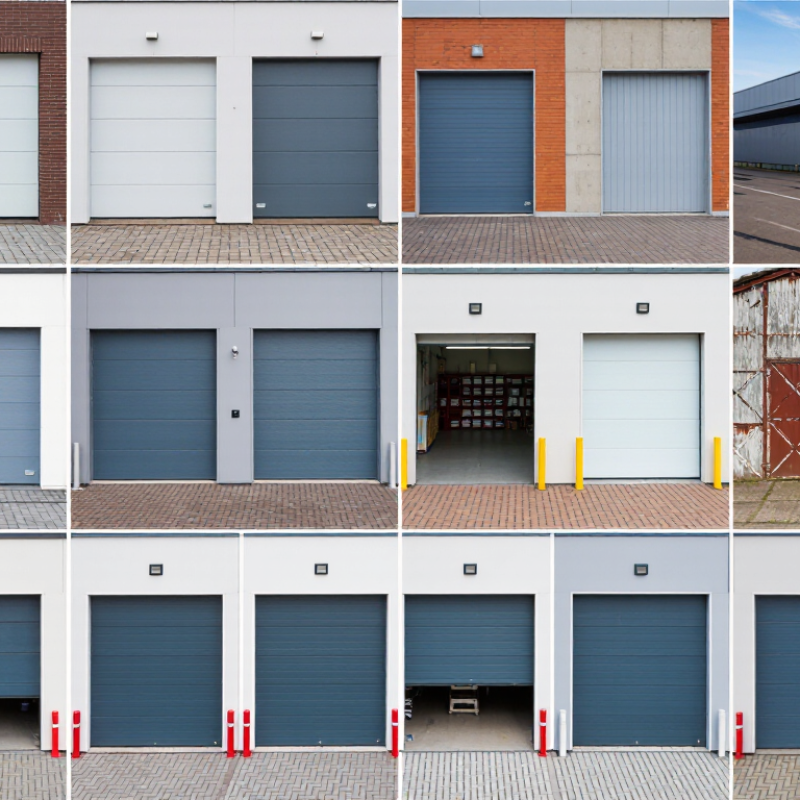
Sectional garage doors consist of connected horizontal panels that move vertically, then slide along ceiling tracks. Unlike one-piece doors, they do not swing outward. This saves driveway space and suits compact properties. Steel, aluminum, and composite panels offer different levels of strength, weight, and insulation.
When the door opens, rollers guide each panel through curved tracks. Torsion or extension springs balance the door’s weight. An electric opener then lifts it smoothly, while safety sensors stop movement when an object crosses the threshold. Professional installers check wall strength, ceiling clearance, track alignment, and local electrical requirements. These details matter for global buyers because building conditions and climate vary widely. In coastal areas, corrosion-resistant hardware is a practical choice. In cold regions, insulated panels can reduce heat loss, though they may cost more.
Tips:
Measure the opening twice, including headroom and side clearance. Ask for documented load ratings and safety testing. Check whether replacement springs and rollers are locally available. A door can look excellent but still perform poorly if tracks are misaligned. That mistake is easy to underestimate. Also, remote controls should use secure rolling-code technology, and sensors need regular testing. No system is perfect. Dust, humidity, and careless adjustment can shorten its service life. A qualified technician should inspect spring tension and opener force before daily use.
Key Factors for Comparing Sectional Garage Doors Worldwide
10 Best Sectional Garage Doors for Global Buyers?
Comparing sectional garage doors worldwide requires more than checking panel thickness. Climate, opening size, traffic frequency, and local standards can change the right choice. The 2023 Global Status Report for Buildings and Construction from UNEP reports that buildings consume about 34% of global energy. Therefore, buyers should compare panel U-values, perimeter seals, and thermal bridges, not insulation claims alone. A lower U-value usually means better insulation.
Performance must fit the location. For coastal or typhoon-prone areas, check wind-load evidence under EN 12424 or an equivalent national standard. For wet regions, review water penetration ratings under EN 12425. Air permeability also matters, especially in heated warehouses. Small gaps become expensive leaks. They are often overlooked.
Safety and service life deserve equal attention. Compare cycle ratings with expected daily use, such as 10 cycles or 40 cycles per day. Confirm protection against cable failure, spring breakage, finger trapping, and uncontrolled closing. Standards such as EN 13241 and regional safety requirements can support reliable evaluation, but certification must match the destination market. I would not trust a brochure alone. Ask for test reports, installation tolerances, spare-part availability, and maintenance instructions. A higher insulation rating is not automatically better if the door is poorly fitted or difficult to repair.
Ten Leading Sectional Garage Door Options for Global Buyers
Ten Leading Sectional Garage Door Options for Global Buyers
Global buyers need more than attractive panels. They need doors matched to climate, opening size, safety rules, and service capacity. The UNEP 2024 Global Status Report for Buildings and Construction states that buildings consumed 32% of global energy in 2023. Insulated doors can therefore support better thermal control, although results depend heavily on installation quality.
Ten practical options cover different project needs:
1) basic steel doors for low-cost housing
2) polyurethane-insulated doors for cold regions
3) polystyrene-insulated doors for moderate climates
4) aluminum-glass doors for showrooms
5) corrosion-resistant doors for coastal areas
6) high-cycle doors for busy facilities
7) compact vertical-lift doors for limited headroom
8) full-view doors for daylight access
9) fire-rated doors where approved by local authorities
10) custom wind-rated doors for exposed locations
Every option should include tested springs, guarded rollers, reliable seals, and compatible lifting hardware.
Check the evidence. The U.S. Department of Energy reports that air sealing and insulation improvements may reduce annual heating and cooling costs by 10% to 20%. This figure is not a promise for every garage. Poor joints can waste the advantage.
EN 13241 supports performance assessment for industrial, commercial, and garage doors in relevant markets, while ASTM E330 testing helps evaluate structural pressure resistance. Buyers should request test reports, cycle ratings, installation drawings, and spare-parts plans. I would not choose the thickest panel automatically. Weight, humidity, wind exposure, and local technicians may matter more.
How to Choose the Right Sectional Garage Door for Your Market
How to Choose the Right Sectional Garage Door for Your Market
Choosing among the 10 best sectional garage doors requires more than comparing prices. A suitable door must match local weather, building design, and daily usage. Climate changes everything. In coastal markets, corrosion-resistant hardware and sealed panels can protect moving parts from salty air. In colder regions, insulated panels help reduce heat loss around workshops and attached homes. Measure twice. Opening width, ceiling height, track space, and floor level affect installation quality.
Safety requirements also vary by market. Check local standards for spring protection, emergency release systems, photo sensors, and wind resistance. Ask for test reports, installation manuals, and clear warranty terms. Reliable documentation often reveals more than attractive product images. A door used twenty times daily needs stronger springs, rollers, and hinges than one serving a private garage.
I once underestimated the importance of local installers. That mistake stayed with me. Even a well-designed door may perform poorly after incorrect alignment or weak anchoring. Choose a supplier that offers replacement parts, technical training, and responsive after-sales support. Allow room for imperfect conditions, such as uneven masonry or delayed shipments. The best specification on paper may need adjustment in the field. Keep spare components available when delivery routes are long. This practical detail can prevent extended downtime.