
What Is Wooden Furniture Types Materials and Benefits?
Wooden Furniture remains a strong choice for homes, offices, hotels, and hospitality spaces. It combines structural strength, tactile warmth, and visual character. Yet its value depends on more than appearance. The wood species, drying method, joinery, finish, and sourcing history all influence performance. A walnut dining table feels dense and smooth. A pine shelf feels lighter and more approachable. Both can work well, but they serve different needs.
Grand View Research estimated the global wooden furniture market at approximately USD 405.8 billion in 2022. Its report also projected continued growth through 2030, supported by renovation, urban housing, and consumer interest in natural materials. The Food and Agriculture Organization’s Global Forest Resources Assessment 2020 reported that forests cover about 31% of the world’s land area. These figures show the market’s scale, but they also raise a harder question: can demand grow without encouraging irresponsible forest use?
American woodworker Sam Maloof often expressed the craft’s central idea: “The wood tells you what it wants to be.” His words suggest cooperation rather than control. Good furniture respects grain direction, movement, and natural defects. It should also survive daily contact, spilled coffee, moving homes, and changing humidity. That promise is real, but not automatic. This guide examines Wooden Furniture types, including solid wood, engineered wood, veneer, and reclaimed materials. It compares oak, pine, walnut, teak, bamboo, and other popular options. It also considers durability, maintenance, sustainability, cost, and indoor comfort. Some choices look perfect in a showroom. They may disappoint after a year. Careful evaluation matters.
What Is Wooden Furniture?
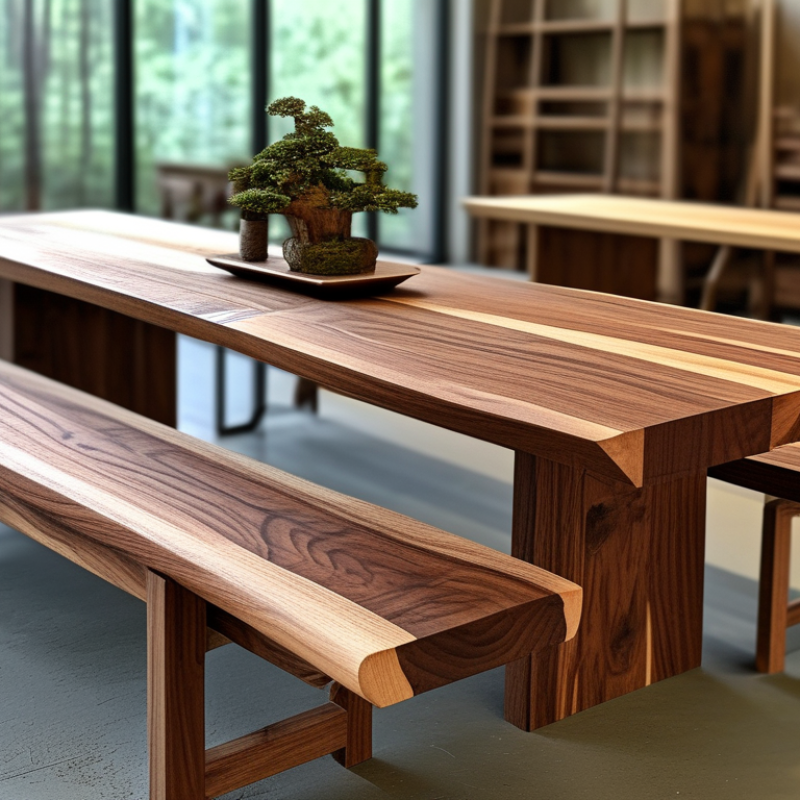
Wooden furniture is made primarily from natural timber or wood-based panels. It includes tables, chairs, beds, cabinets, and shelves. Solid wood comes from cut boards, while engineered wood uses pressed fibers, veneers, or layered sheets. Both forms can become durable furniture when designed and assembled carefully.
Wood has a visible grain, warm touch, and quiet visual weight. A dining table may show knots, small color changes, or fine lines along its surface. These details are not defects in every case. They often reveal the material’s natural history. It feels alive. Different woods also respond differently to moisture, sunlight, and temperature. A solid board can expand during humid weather and contract in dry rooms, so skilled construction leaves space for movement.
The quality of wooden furniture depends on more than the material itself. Strong joints, even sanding, stable support, and a suitable finish all matter. In daily use, a sealed tabletop can resist ordinary spills, but standing water may still cause stains or swelling. Care is simple but imperfect: wipe dust gently, use coasters, and keep furniture away from intense heat. Some scratches will appear over time. That is part of its character, though not always convenient. Choosing wood furniture means accepting both its strength and its changing surface.
Main Types of Wooden Furniture
Wooden furniture includes pieces built mainly from solid timber or wood-based panels. Its form, grain, weight, and repairability depend on the material and construction. Grand View Research valued the global furniture market at approximately $516.66 billion in 2022. The report also projects continued growth through 2030, showing strong demand for practical household furnishings.
Main Types of Wooden Furniture
Case goods include cabinets, chests, bookcases, and sideboards. They provide enclosed storage and often use oak, walnut, pine, plywood, or medium-density fibreboard. Tables include dining tables, desks, coffee tables, and console tables. Solid timber offers visible grain, while engineered panels can improve dimensional stability. Seating includes wooden chairs, stools, benches, and frames supporting upholstered cushions. Bedroom furniture covers beds, wardrobes, nightstands, and dressers. These pieces need dependable joints because repeated movement can loosen weak connections. A 2023 CSIL furniture industry report identifies living, dining, bedroom, and storage products as major furniture categories worldwide.
Tips: Check the joinery before buying. Dovetail drawers and mortise-and-tenon joints usually indicate careful construction. Look for FSC-certified or legally sourced timber when possible. Measure doorways, stair turns, and floor space first. Wood changes with humidity. Keep furniture away from radiators and wipe spills quickly.
A useful caution remains. “Solid wood” does not always mean superior quality. Poorly dried timber may warp, crack, or split. Engineered wood is not automatically inferior either. High-quality plywood can outperform weak solid boards in some applications. The best choice depends on use, climate, load, maintenance, and repair access. I would also inspect the underside, because attractive surfaces can hide thin panels or rushed assembly.
Common Materials Used in Wooden Furniture
Wooden furniture begins with material choice, not surface color. Solid wood, including oak, pine, walnut, and maple, offers visible grain, strong joints, and a warm touch. A dining table may show small knots, seasonal movement, or uneven tones. These details are normal. They also require careful drying and stable indoor humidity. The FAO’s Global Forest Resources Assessment 2020 reports that forests cover about 31% of the world’s land area. Responsible sourcing therefore matters when selecting solid timber.
Engineered wood is widely used in modern furniture. Plywood contains thin wood layers, crossed for better strength and dimensional stability. It suits cabinets, shelving, and chair frames. Medium-density fiberboard, or MDF, uses refined wood fibers and creates a smooth surface for paint. Particleboard uses wood particles and usually costs less. However, edges can swell after water exposure. The United States Environmental Protection Agency identifies MDF, particleboard, and hardwood plywood as regulated composite wood products under its formaldehyde emissions standards. Check sealed edges and indoor-air documentation.
Bamboo is another common furniture material, although it is technically a grass. It grows quickly and creates a light, clean appearance. Veneer adds a thin layer of natural wood over plywood or fiberboard, reducing material use while preserving real grain. It can look convincing. Sometimes, too convincing. When choosing furniture, inspect the underside, drawer joints, edge banding, and finish. A beautiful surface cannot repair a weak core. My own preference is not always solid wood; stable plywood can perform better in humid rooms.
How Wooden Furniture Is Made
Wooden furniture begins with careful material selection. Solid wood offers visible grain and repairability, while plywood and medium-density fiberboard provide stability and efficient use of resources. The FAO’s Global Forest Resources Assessment 2020 reports that forests cover about 31% of the world’s land area. Responsible manufacturers still need traceable sourcing, because availability does not always mean sustainability.
The making process starts with sawing, grading, and kiln-drying boards. The USDA Forest Products Laboratory’s Wood Handbook notes that interior wood commonly reaches about 6–8% moisture content, depending on local climate. This step reduces later warping and joint failure. Workers then cut panels, shape edges, drill holes, and create joints such as mortise-and-tenon connections. Adhesive assembly may follow. Surfaces are sanded through several grits before oil, wax, water-based coating, or lacquer is applied. Final checks examine flatness, sharp edges, finish consistency, and hardware alignment. The process is controlled, but never perfectly uniform. Natural grain remains unpredictable.
Tips: Ask about moisture content and wood origin. Inspect end grain, joint gaps, and drawer movement. A strong finish cannot correct weak joinery. Allow finished furniture to acclimatize indoors before judging small changes. Even experienced makers sometimes miss subtle movement, so maintenance records and periodic inspections matter.
What Is Wooden Furniture? Types, Materials, Benefits, and How Wooden Furniture Is Made
| Category | Type or Material | Key Characteristics | Common Furniture Uses | Main Benefits |
|---|---|---|---|---|
| Furniture Type | Solid Wood Furniture | Made primarily from natural wood pieces rather than wood fibers or veneers. | Dining tables, beds, wardrobes, chairs, and storage cabinets. | Strong, repairable, long-lasting, and visually distinctive because of its natural grain. |
| Furniture Type | Engineered Wood Furniture | Manufactured from wood fibers, particles, strands, or layers bonded into panels. | Shelving, desks, modular cabinets, wardrobes, and flat-pack furniture. | Consistent dimensions, efficient material use, and generally lower cost than many solid-wood options. |
| Furniture Type | Veneer Furniture | A thin layer of natural wood is applied over a stable core such as plywood or fiberboard. | Tables, doors, cabinets, sideboards, and office furniture. | Provides a natural wood appearance while reducing movement, weight, and material consumption. |
| Wood Material | Oak | A dense hardwood with a prominent grain and good resistance to everyday wear. | Dining furniture, flooring-style tabletops, chairs, and storage pieces. | Durable, widely used, and suitable for traditional or contemporary designs. |
| Wood Material | Maple | A hard, close-grained wood with a relatively light and uniform appearance. | Cabinet doors, worktops, chairs, drawers, and high-use surfaces. | Good abrasion resistance and a clean appearance that accepts many finishes. |
| Wood Material | Pine | A lightweight softwood with visible knots and a comparatively soft surface. | Shelves, bed frames, tables, stools, and casual furniture. | Easy to machine, relatively affordable, and suitable for painted or stained finishes. |
| Wood Material | Walnut | A hardwood commonly recognized for darker brown tones and varied grain patterns. | Premium tables, desks, cabinets, beds, and decorative accents. | Distinctive appearance, good workability, and strong appeal for feature furniture. |
| Panel Material | Plywood | Several thin wood layers are bonded with their grain directions arranged in alternating directions. | Cabinet carcasses, tabletops, chairs, drawers, and structural panels. | Good dimensional stability, strength-to-weight performance, and resistance to splitting compared with many solid boards. |
| Panel Material | MDF | Fine wood fibers are combined with resin and compressed into a smooth, uniform panel. | Painted doors, shelving, moldings, desks, and cabinet components. | Smooth surface, consistent thickness, and easy routing or painting; it should be protected from prolonged moisture. |
| Panel Material | Particleboard | Wood particles are bonded under pressure to create a relatively economical panel. | Shelving, cabinet cores, drawer components, and budget furniture. | Cost-efficient and suitable for laminated or veneered surfaces when kept dry and properly supported. |
| Manufacturing Stage | Design and Material Selection | The product dimensions, load requirements, joinery, wood species, and panel construction are determined. | All wooden furniture categories. | Helps match the material to the intended strength, appearance, cost, and indoor environment. |
| Manufacturing Stage | Drying and Conditioning | Wood is dried to reduce excess moisture before machining and assembly. | Most solid-wood furniture components. | Reduces the risk of excessive shrinkage, swelling, warping, and joint movement after manufacture. |
| Manufacturing Stage | Cutting and Machining | Boards or panels are cut, shaped, drilled, routed, and prepared for joinery. | Frames, legs, doors, shelves, drawers, and tabletops. | Creates accurate components and functional details such as holes, grooves, and profiles. |
| Manufacturing Stage | Joinery and Assembly | Parts are connected with methods such as screws, dowels, biscuits, mortise-and-tenon joints, or adhesives. | Tables, chairs, cabinets, beds, and shelving units. | Provides structural stability and determines how easily the furniture can be repaired or disassembled. |
| Manufacturing Stage | Sanding and Surface Preparation | Surfaces and edges are smoothed to remove machining marks and prepare them for finishing. | Visible wood surfaces and touch points. | Improves tactile quality, appearance, and finish adhesion. |
| Manufacturing Stage | Finishing and Quality Inspection | Stain, paint, oil, wax, or clear protective coatings may be applied, followed by checks for defects and stability. | Completed wooden furniture. | Enhances color and appearance while helping protect surfaces from dirt, moisture, and routine wear. |
Note: Actual performance depends on wood species, moisture content, construction quality, finish, design, and indoor environmental conditions.
Benefits and Care of Wooden Furniture
Wooden furniture includes tables, chairs, beds, cabinets, and shelving made from solid wood, veneer, or engineered wood. Solid oak, walnut, pine, and beech each offer different grain patterns, weights, and durability. In my experience, a solid wood dining table feels warmer and more stable than many lightweight alternatives. However, it can move slightly with seasonal humidity. That small change is normal, not necessarily a defect. Wood also ages visibly, developing deeper color and small marks that record daily use.
Proper care protects both appearance and structure. Dust with a soft, dry cloth before wiping the surface with a lightly damp cloth. Excess water can enter joints or raise the grain. Dry spills quickly, especially coffee, oil, and alcohol. Keep furniture away from radiators, heating vents, and strong direct sunlight. I once left a wooden side table beside a sunny window, and its finish faded unevenly. That mistake was avoidable. Use coasters, felt pads, and mats beneath hot dishes or decorative objects. Avoid harsh cleaners unless the furniture maker specifically permits them.
Tips: Check the care instructions before applying polish. Test any product on a hidden area first. Tighten loose screws gently, but do not force them. For deep scratches, warped panels, or white heat marks, consult a qualified furniture restorer. Wood is forgiving. Not endlessly.
What Is Wooden Furniture? Types, Materials, Benefits and Care
Wood species differ in hardness, which affects their resistance to dents and everyday wear. The chart compares representative Janka hardness values measured in pounds-force (lbf).
Harder woods such as maple and oak are generally suitable for heavily used furniture surfaces, while softer woods such as pine may require more careful handling. Regular dusting, prompt cleaning of spills, stable indoor humidity, and protection from direct sunlight can help preserve wooden furniture.
