Top Wholesale Home Theater Seats for Global Buyers
Wholesale Home Theater Seats can look similar in catalog photos, yet small details shape buyer satisfaction. Seat width, recline clearance, upholstery, and carton dimensions all affect whether a model suits a project. For global buyers, reliable comparisons start with measurable specifications, clear product documentation, and realistic shipping information. A showroom-ready finish matters. So does a carton that arrives intact.
A fictional composite sourcing adviser, Elena Brooks, offers this original illustrative line: “A good wholesale seat must fit the room, the customer, and the shipping plan—not just the catalog.” This is not a verified quotation from a real industry professional. It captures a practical buying principle: assess frame construction, foam support, reclining mechanisms, available fabrics, warranty terms, and production lead times before requesting volume pricing. Ask for samples or detailed product images when possible. Check how the supplier handles replacement parts, too.
A low unit price can mislead. Freight, packaging, customization, and minimum order quantities may change the real cost. And room layouts vary. Buyers should compare seat dimensions against their plans, then confirm details directly with the manufacturer. No checklist removes every risk; specifications can still leave questions. This guide introduces leading wholesale options and the details worth checking, helping distributors, retailers, and project buyers make more informed decisions.
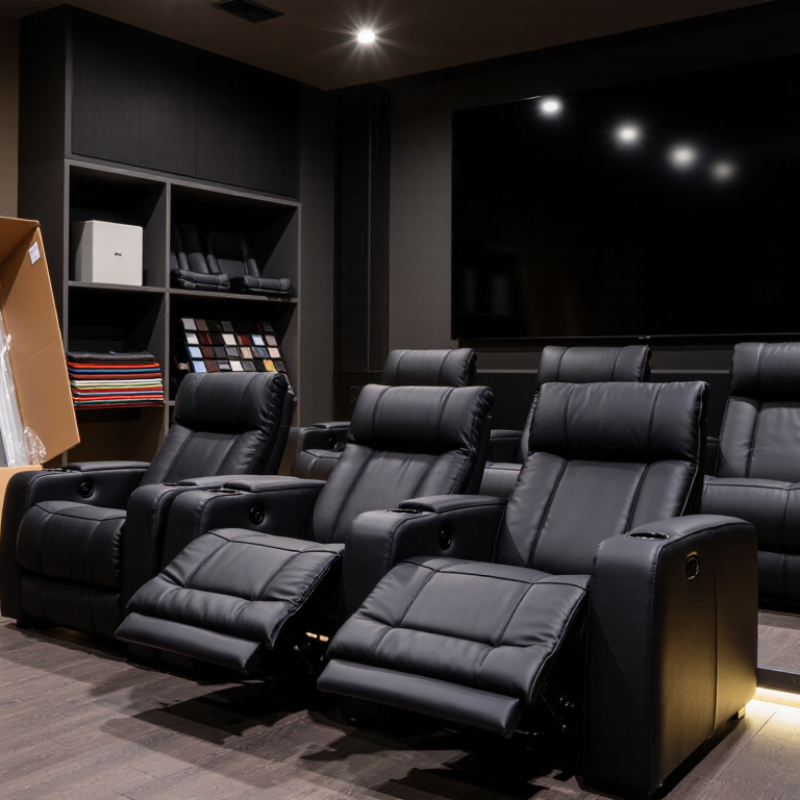
Wholesale Home Theater Seats: Product Types and Common Configurations
Wholesale home theater seats usually come in three forms: single recliners, connected row seating, and multi-seat sofas. Single recliners suit smaller rooms or flexible layouts. Row units create a consistent look, while sofas use less floor space per person. Manual recliners keep controls simple. Power models add adjustable headrests and footrests, but buyers should confirm electrical specifications for each destination market.
Configurations vary by seat count, arm style, and shared features. A two-seat row with a center console can hold drinks and a remote. Three-seat layouts may include cup holders at every arm, though wider arms reduce seating capacity. Wall-hugging frames need less rear clearance, but still require room for footrests and walkways. Measure doorways, aisles, and packed cartons before ordering. Small details matter.
For wholesale orders, compare upholstery, frame construction, foam density, and carton dimensions across samples. These details affect comfort, handling, and shipping volume. A sample can reveal stiff padding or awkward controls that a specification sheet misses. Configurations are not always interchangeable between room plans. It is easy to overestimate how many seats will fit.
Seat Specifications: Compare Recline, Power, USB, and Upholstery Options
For global buyers, home theater seats should be compared by measurable features, not photos alone. Check the recline range and closed depth, since a seat that looks compact can block a walkway when extended. Ask suppliers for dimensions in both positions, including the footrest. For power recliners, confirm the intended voltage, plug configuration, control location, and cable route. Test a sample.
Compare USB port type, output, placement, and whether charging stays available during recline. A port near the cupholder is handy, but loose cables can snag as the seat moves. Upholstery affects cleaning, comfort, and wear. Request swatches and check them under ordinary room lighting. Ask how the material responds to frequent wiping and whether seams feel secure. A single sample cannot show every production variation, which is easy to overlook.
Tips: Measure doorways, aisles, and power access before ordering. Check a seat fully reclined, not just upright. Keep a simple comparison sheet for each supplier. Specifications help, but the showroom feel may differ slightly from a real room. That detail deserves a second look.
Top Wholesale Home Theater Seats for Global Buyers
Seat Specifications: Compare Recline, Power, USB, and Upholstery Options
The chart shows representative maximum recline angles for common seating configurations; actual specifications vary by model. Manual models provide basic reclining, while powered options typically need an electrical connection. USB charging is often available on powered seats or consoles. Upholstery choices commonly include fabric, PU leather, and genuine leather.
Viewing Layout: SMPTE’s 30° Minimum Screen Viewing Angle
For wholesale home-theater seating, build the plan around the screen, not the number of seats that fit on a drawing. SMPTE guidance is commonly cited for a minimum horizontal viewing angle of 30 degrees. This means the screen should span at least 30 degrees from the main viewing position. Measure from the viewer’s eyes to the screen, then check the angle before fixing seat rows.
A useful reference is SMPTE Engineering Guideline EG 18-1994, “Design of Effective Cine Theaters.” For a 120-inch, 16:9 screen, the image is about 105 inches wide. A 30-degree viewing angle puts the farthest primary viewing position roughly 16 feet away, using the standard angle calculation.
Measure twice. In wider rooms, seats at the edges may see a narrower angle and feel detached from the image. Keep those positions in mind when comparing seat quantities and row spacing. A plan can satisfy the geometry on paper but still feel cramped once recliners extend.
Real rooms are messier. Mock up the front row with actual seat depth and a clear aisle; then review sightlines from every planned position. The 30-degree threshold is a starting point, not a guarantee of comfort.
Room Planning: THX’s 36° Viewing Angle and Seat-Row Sightlines
A 36-degree horizontal viewing angle is a useful starting point for planning a home theater, not a rule for every room. Measure from the seated eye position to the screen edges, then check the angle from each row. A closer seat can make a large screen feel immersive, or simply too intense. Personal preference matters.
Sightlines need equal care. Measure seated eye height and the screen’s lower edge, then check whether viewers can see over the heads in front. Riser height depends on row spacing, seat cushions, recline, and screen position. Measure carefully. A quick mock-up with chairs and a taped screen outline can reveal problems before a bulk order. Real rooms rarely match the drawing perfectly.
For wholesale orders, compare seat dimensions and request layout drawings before choosing row counts. Leave enough clearance for reclined seats and clear aisles. Check sightlines from the outer seats too; they may face the screen at a sharper angle. Small differences matter. A plan that works for one sample chair may shift when several rows are installed, so confirm measurements using the exact seat model and configuration.
Global Sourcing: Assess Fire Codes, MOQ, Lead Time, and Warranty Terms
Top Wholesale Home Theater Seats for Global Buyers
Global sourcing starts with fire-code documentation, not a low unit price. Ask suppliers for test reports covering the exact seat materials, including foam, fabric, and any built-in electrical components. Requirements can vary by destination and project type, so have a qualified local reviewer confirm that documents match the intended installation. A report for a similar fabric may not be enough. Keep copies with the purchase order.
Confirm the minimum order quantity (MOQ) by model, color, and upholstery choice. A low MOQ may apply only to standard finishes. Request a production schedule with sample approval, manufacturing, inspection, and shipping shown as separate stages. Add time for port delays. It matters. Warranty terms should state coverage length, exclusions, replacement-part availability, and who pays freight for a claim. Ask how defects are documented, too; photos and batch numbers can prevent slow email exchanges. A spreadsheet can make lead times look exact, but real production rarely behaves perfectly.
Tips: Get one finished sample before approving a large order. Compare stitching, recline movement, and cup-holder fit. Save the signed specifications, test records, and warranty terms in one file. Then check a few units during inspection, not just the first sample.