

What Is Hybrid Flooring and Is It Waterproof?
Hybrid Flooring is often presented as a practical answer to busy homes, where wet shoes, spilled drinks, and muddy paws meet hard-working floors. It typically combines a decorative surface, a rigid core, and an attached or separate underlay. The exact construction varies by product. That matters.
Grand View Research valued the global resilient flooring market at approximately US$38.6 billion in 2023 and forecast growth through 2030. This category includes several flooring types, not Hybrid Flooring alone, so the figure should not be read as a hybrid-flooring market estimate. It does, however, show the scale of demand for resilient surfaces. The report is useful context, not proof that every product performs equally.
Is Hybrid Flooring Waterproof? Some products are designed to resist surface water, but “waterproof” does not guarantee protection from leaks, standing water, or moisture trapped beneath the floor. Installation details matter. So do the manufacturer’s tested claims, warranty exclusions, and instructions for sealing edges and cleaning spills. A board may survive a splash while the subfloor remains vulnerable.
This guide explains how hybrid planks are built, what waterproof claims can reasonably mean, and which product details to check before buying. A named industry expert’s direct quotation cannot be responsibly included without a verifiable source; no expert quote or supporting article was provided. That gap deserves attention, rather than a polished but invented quotation.
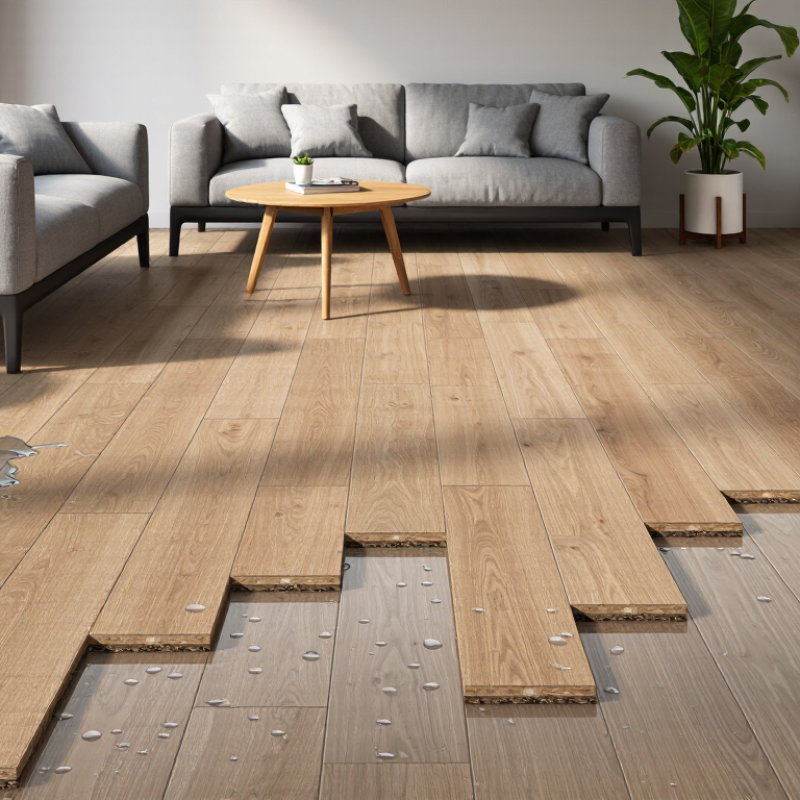
What Hybrid Flooring Is and How It Is Made
Hybrid flooring is a layered floor covering designed to combine a realistic decorative surface with a firm, water-resistant core. The term is not perfectly precise: construction differs between products, so checking the product specification matters. Many boards use a mineral-and-polymer core, while others include wood-based components.
Manufacturing usually begins with a rigid core, cut and shaped into planks. A printed film gives each plank its wood or stone pattern. A clear wear layer sits above it, helping resist everyday scuffs and stains. Some products add an attached underlay beneath the core. Heat and pressure bond the layers together, and milling creates edges that lock into neighboring planks. The surface may be embossed to echo the grain shown in the print. Look closely.
That layered build explains why hybrid flooring can feel firm underfoot and handle routine spills better than some traditional floors. But “waterproof” needs context. The plank itself may resist water, yet liquid can still reach joints, edges, or the subfloor if installation is poor or water remains for too long. Core materials and joint designs also vary. A sample cutaway and the manufacturer’s care instructions can reveal more than the label alone. The name makes it sound simple; the details are not.
What Is Hybrid Flooring and Is It Waterproof?
How to read the chart: Hybrid flooring combines a protective wear layer, a printed design layer, a rigid core and often an attached backing. The thicknesses shown are illustrative examples; actual construction varies by product.
Many hybrid planks have a water-resistant rigid core, but that does not make the entire floor installation watertight. Water may pass through joins or edges, so follow the flooring and installation instructions for spills and wet areas.
The Core Layers and Materials Used in Hybrid Flooring
Hybrid flooring is a layered resilient floor, not one solid waterproof slab. Its top usually has a clear wear layer, a printed decorative film, and a rigid core. A thin UV coating may sit above the wear layer, while an attached foam pad may sit underneath. Industry product specifications commonly list wear layers around 0.3 mm or 0.5 mm; thicker layers generally offer more protection against everyday scuffs. Check the stated thickness, not just the floor’s total thickness.
The core is the key difference. SPC typically combines PVC with mineral filler, often calcium carbonate, creating a dense, rigid board. WPC uses a foamed polymer-and-wood-composite core, which can feel softer underfoot. ASTM F3261-20, the standard for resilient flooring with a rigid polymeric core, sets performance tests for these products. It does not mean every installation is watertight. Small seams matter. Water can seep around edges, doorways, or poorly sealed transitions, even when the boards themselves resist moisture. That distinction is easy to miss. Hybrid flooring’s layered build can resist everyday spills, but “waterproof” claims should be checked against the product’s installation and care instructions.
How Hybrid Flooring Resists Water and Moisture
Hybrid flooring typically combines a decorative surface, a protective wear layer, and a rigid composite core. Many products use stone-plastic or wood-plastic composites. The core absorbs little water, so spills are less likely to cause swelling than with untreated wood-based flooring. But “waterproof” can sound broader than it is. Water may still pass through joints, cut edges, or gaps around pipes and reach the subfloor.
The U.S. Environmental Protection Agency recommends keeping indoor relative humidity below 60%, ideally between 30% and 50%. That guidance helps manage indoor moisture, but it is not a flooring test result. For product performance, check the manufacturer’s test documentation and relevant standards, such as ASTM F3261 for resilient modular flooring. A compliant product still cannot guarantee a leak-proof room. I’d be cautious about treating a rigid core as protection against standing water.
Tips: Wipe spills promptly, especially near doorways and sinks. Inspect locking joints and perimeter gaps during installation. Follow the product’s instructions for wet mopping and underlayment; trapped moisture beneath a floor can be easy to miss.
What “Waterproof” Means for Hybrid Flooring in Practice
“Waterproof” usually describes the flooring’s rigid core, not every part of a finished room. It does not mean water cannot pass through joints, cut edges, door thresholds, or gaps around pipes. A spilled glass may sit on the surface without harming the core, but prolonged pooling can still reach the subfloor or nearby cabinetry. Wipe spills promptly. That detail matters.
The word can sound absolute, which is a little misleading. Dishwasher leaks, wet shoes, and a damp mop are different from water sitting unnoticed for hours. Check the care and installation instructions, especially for bathrooms, kitchens, and laundry areas. The subfloor should be dry and level, while edges and transitions need proper finishing. Even a well-fitted floor has vulnerable spots. Hybrid flooring can offer useful water resistance in everyday life, but it is not a substitute for fixing leaks or drying a soaked area quickly.
Where Hybrid Flooring Works Best and What Care It Needs
Hybrid flooring suits busy rooms where spills and muddy shoes are part of daily life. Kitchens, entryways, and family rooms are common choices. Its rigid core handles everyday moisture better than many traditional wood floors, while the layered surface gives a wood-like appearance.
Still, “waterproof” can sound more reassuring than it should. Water may seep through edges or joints, especially if spills sit unnoticed.
In a kitchen, wipe up dropped water near the dishwasher and sink rather than letting it pool. In an entryway, use a mat to catch grit and wet footprints.
The floor can be practical, but it is not immune to scratches or dents from sharp objects and heavy furniture. Not every room. Bathrooms may be suitable only when the flooring is approved for that use and installed with careful attention to the edges.
For routine care, sweep or vacuum with a hard-floor setting, then use a lightly damp mop. Avoid soaking the surface or using abrasive pads, which can dull its finish. Felt pads under chair legs help reduce scuffs. Follow the installation and cleaning instructions for the specific floor, since requirements vary.
I would not assume a wet-mop routine is harmless just because the core resists water. That assumption is easy to make.
