




How to Choose the Best Venetian Blinds
Choosing the right venetian blinds is not just a matter of matching a color to the walls. The slat material, width, control style, and room conditions all affect how the blinds look and work. A sunny kitchen may need moisture-resistant aluminum or faux wood, while a bedroom could benefit from wider slats that soften incoming light. Small details matter. A cord that catches on a cabinet handle can become irritating every day.
Designer William Morris offered a useful principle: “Have nothing in your houses that you do not know to be useful, or believe to be beautiful.” Applied to venetian blinds, that means weighing appearance alongside practical needs. Consider how much privacy you want at night, whether glare falls across a screen, and how easily you can reach the window controls. Measure the inside or outside of the frame carefully; even a narrow mismatch can leave an awkward strip of light. Exact requirements vary by window and fitting method.
There is no perfect choice for every room. Wood can bring warmth, but it may not suit damp spaces; aluminum is easy to clean, though it can feel cooler visually. And sometimes a sample looks different at home. That is worth checking before ordering. This guide will help compare materials, slat sizes, light control, and maintenance, so you can choose venetian blinds that suit both the window and the way you use the room.
Understanding How Venetian Blinds Work
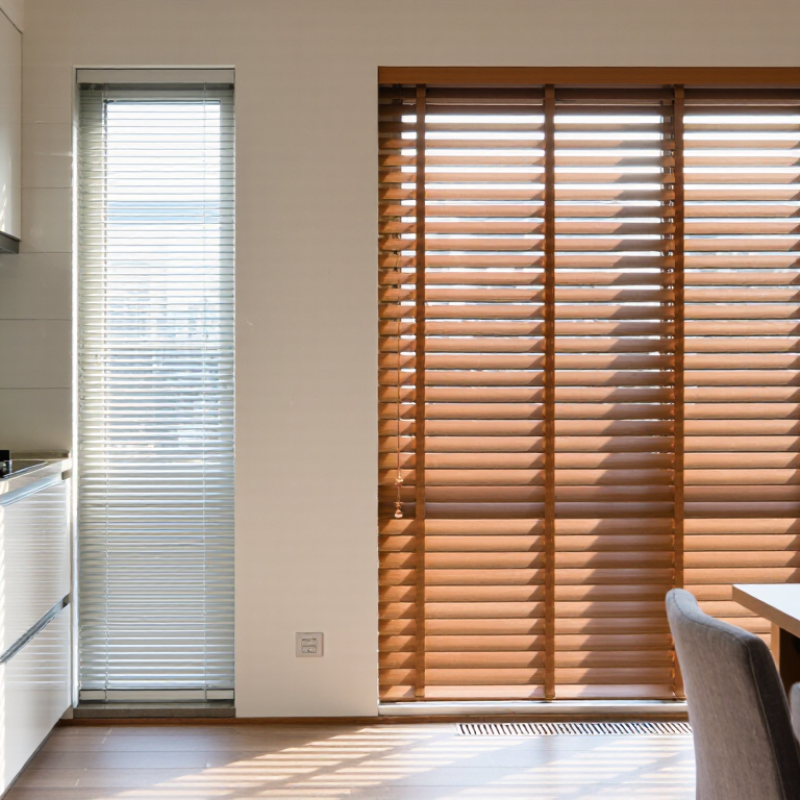
Venetian blinds use horizontal slats that tilt to control light and privacy. A cord, wand, or internal mechanism adjusts their angle. When the slats turn, narrow gaps open or close between them. This lets you soften bright sunlight without darkening the whole room. Pulling the lift cord raises the slats into a stack; lowering them covers the window. The exact controls vary, so check how a sample moves before choosing. It sounds simple. Yet even a small tilt can change glare on a screen or the warmth near a sunny window.
Slat width affects both appearance and use. Wider slats often give a clearer view when open, while narrower ones create a finer, more detailed look. Consider how you will operate the blind each day, especially on a frequently used window. Measure the window recess carefully, and note handles or trim that could interfere with movement. In my experience, people sometimes focus on color first and overlook how the blind will feel to operate. That is an easy mistake. Cordless lifting can also reduce loose cords, though the mechanism may feel different from a traditional pull cord.
Tips: Tilt the slats toward the ceiling to reduce direct glare while keeping some daylight. Test the lift and tilt controls, and check that the blind clears nearby handles. Don’t assume one setting suits every room.
| Feature | How It Works | What to Consider When Choosing | Practical Guidance |
|---|---|---|---|
| Slats and tilt control | Horizontal slats are connected by ladder cords or tapes. A tilt mechanism rotates them to adjust how much light enters and how much of the view is screened. | Choose a blind with a smooth, reliable tilt mechanism and slats that stay aligned when adjusted. | Angling the slats can reduce direct glare while still allowing some daylight into the room. |
| Raising and lowering | Lift cords, cord loops, or a cordless mechanism raise and lower the slats. When raised, the slats stack near the headrail. | Check the window height, the space needed for the raised stack, and whether the controls are convenient to reach. | For homes with young children, consider cordless designs or products that meet applicable local cord-safety requirements. |
| Aluminium slats | Lightweight metal slats pivot to control daylight and privacy. | Consider aluminium for a lightweight option in kitchens, bathrooms, or other spaces where easy cleaning is useful. | Wipe dust and marks with a soft cloth. Thin slats can bend if handled roughly. |
| Wood slats | Wood slats tilt and lift in the same way as other Venetian blinds, while adding a natural finish. | Consider room humidity, weight, and the care instructions for the specific finish. | Wood can be affected by moisture and temperature changes, so it is generally less suitable for persistently damp conditions. |
| Faux-wood slats | Composite or PVC-based slats provide a wood-like appearance and use the same tilt-and-lift arrangement. | Compare weight, slat thickness, finish, and the manufacturer’s guidance for heat and moisture exposure. | Often considered for humid rooms because many faux-wood products are more moisture-resistant than natural wood; suitability varies by product. |
| Slat width | Wider slats usually create fewer horizontal lines and may offer a broader outward view when tilted open. Narrower slats create a finer appearance. | Match the slat width to the window size, desired look, and the clearance available when the blind is raised. | There is no single best width for every window; check the product’s dimensions and raised-stack information before ordering. |
| Inside or outside mount | An inside mount fits within the window recess. An outside mount is fixed to the wall or trim around the opening. | Measure the recess at several points and follow the product’s measuring instructions. Check for handles, vents, and other obstructions. | An inside mount gives a close, built-in appearance; an outside mount can cover more of the opening and may reduce light gaps around the edges. |
| Light, privacy, and insulation | Tilting the slats changes the path of light and the line of sight, but gaps between slats and around the blind can remain. | Decide whether your priority is adjustable daylight, daytime privacy, a clearer view, or reduced glare. | Venetian blinds are not usually blackout coverings on their own. For stronger room darkening, consider a compatible secondary shade or curtains. |
| Cleaning and maintenance | Dust collects on the horizontal surfaces of the slats and around the headrail and cords. | Choose a material and finish that suit the room and the amount of cleaning you are willing to do. | Use a duster or soft cloth regularly. Follow the product’s care instructions and avoid soaking materials that are not designed for wet cleaning. |
| Fit and installation | Brackets support the headrail, which houses the tilt and lift components. | Check the blind’s width and height limits, bracket requirements, mounting surface, and required clearances before purchase. | Accurate measurements and secure fixing are important for smooth operation; use appropriate fixings for the wall or window frame. |
Related Posts
-

Top 10 Benefits of Using Shutters and Blinds for Your Home Decor
-

What is a Roller Garage Door and How Does It Benefit Your Home
-

What is a Sash Window and How Does it Benefit Your Home?
-

Why Choose Aluminium Doors for Your Next Home Project?
-

Top Garage Doors Perth Options for Your Home Improvement?
-

What Are the Top China Sectional Garage Doors?