

What Is Copper Foil Tape Used For?
Copper Foil Tape is a thin copper strip backed with adhesive, but its uses depend on the tape’s construction. Some versions have conductive adhesive; others conduct only through the copper face. That difference matters when the tape needs to carry a connection across overlapping pieces.
In stained-glass work, makers wrap copper foil around glass edges before soldering the joints. In electronics, suitable tape can help shield small enclosures or reduce interference when applied to a conductive surface. Hobbyists also use it for model details, sensor prototypes, and repairs where a flexible metal layer is useful. The adhesive and copper can be cut with scissors, then pressed onto clean, dry material. Small details matter.
A practical choice starts with the job, not just the product name. Check the manufacturer’s specifications for foil thickness, adhesive conductivity, temperature range, and compatibility with the surface. For shielding, seams and grounding paths can affect results; a strip of tape alone does not guarantee effective protection. For electrical connections, confirm that the specific tape is rated for the intended use rather than assuming all copper tapes behave alike. It is easy to overestimate what a thin strip can do. That is worth remembering. With the right type and careful application, Copper Foil Tape offers a compact, workable solution for projects that need a conductive or solderable surface.
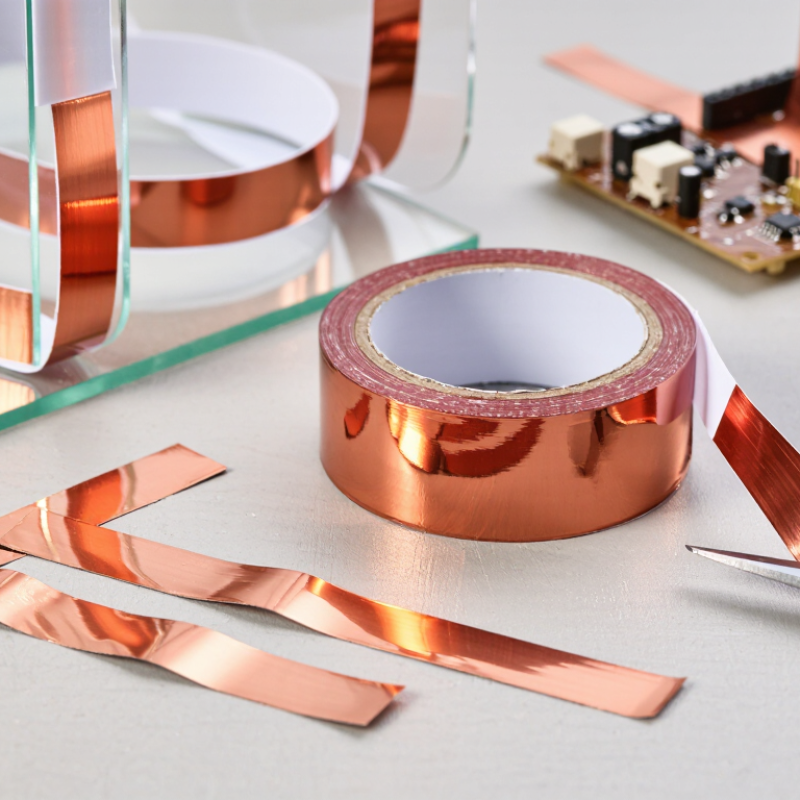
What Copper Foil Tape Is and How It Is Made
Copper foil tape is a thin layer of copper backed with adhesive. It can help shield sensitive electronics from electromagnetic interference, connect surfaces electrically, or hold small components in place. The copper is conductive, but the adhesive may not be. That detail matters when a continuous electrical path is needed.
Copper foil begins as sheet metal made by rolling copper through polished rollers, or as a thin deposit formed on a rotating drum. These methods produce foils with different surface textures and flexibility. The foil is then cut into narrow rolls. A manufacturer laminates adhesive to one side and often adds a removable liner to protect it before use. Thickness, adhesion, and electrical continuity are useful properties to check. Small differences count.
Some tapes use conductive adhesive, while others conduct only through the copper face. A clean, dry surface usually helps the adhesive bond, though results depend on the material beneath it. A wrinkle or dusty edge can interrupt contact. It is easy to overlook that. When applying tape for shielding or grounding, overlap and connection points deserve attention, not just the copper’s appearance.
Key Properties That Shape Its Uses
Copper foil tape is useful because its thin metal backing combines electrical conductivity, flexibility, and a broad contact surface. That combination supports EMI shielding, grounding, low-voltage connections, and repairs to conductive surfaces. The Copper Development Association reports annealed copper at about 100% IACS; the IACS reference is 58 MS/m at 20°C. In practice, the foil can carry current, but the adhesive layer also matters. Some adhesives conduct between layers; others insulate them. That distinction can change whether overlapping tape forms a reliable electrical path.
Its flexibility helps the tape follow a curved enclosure or a narrow seam. Yet thin foil can crease, tear, or lose contact on dusty, oily surfaces. For shielding, gaps and poor grounding can undermine an otherwise neat application. IPC-4562, an industry specification for copper foil used in printed wiring boards, distinguishes foil types and defines material requirements. It is a useful reference for foil properties, but it does not certify every tape’s shielding performance. A small caveat is easy to miss: tape construction varies, so verify the adhesive, thickness, and intended use rather than assuming all copper tape behaves alike.
Tips: Clean and dry the surface first. Test continuity across an overlap with a multimeter, especially when grounding or shielding matters. Don’t stretch the foil; wrinkles can weaken contact.
What Is Copper Foil Tape Used For? Key Properties That Shape Its Uses
Copper’s high electrical conductivity helps explain why copper foil tape is used for electrical continuity, grounding, and electromagnetic interference (EMI) shielding.
Approximate bulk-metal conductivity at 20°C, expressed as a percentage of the International Annealed Copper Standard (IACS). Actual tape performance also depends on foil thickness, adhesive, and how the tape is applied.
Electrical Grounding and Electromagnetic Shielding Applications
Copper foil tape is often used to create conductive paths and reduce electromagnetic interference around small enclosures, cable openings, and electronic assemblies. Its copper surface conducts electricity, but the adhesive matters too. A conductive adhesive can maintain continuity across overlaps; ordinary adhesive may interrupt the electrical path. Check the tape’s specifications before relying on it for grounding or shielding.
For grounding, installers may apply tape between a conductive housing and a designated grounding point. Clean, dry surfaces help the adhesive make consistent contact. Press the tape firmly, especially at corners and seams. It should not replace a required grounding conductor or serve as a shortcut in a safety-critical design. That distinction is easy to miss.
For electromagnetic shielding, copper tape can cover gaps around a panel or line the inside of a small project enclosure. Continuous seams matter: a loose edge or narrow opening can let interference through, particularly at higher frequencies. Overlap strips carefully, then check electrical continuity with a meter. Results depend on frequency, enclosure design, and installation quality. Copper helps, but it is not magic. Even a neat-looking seam may need testing.
Uses in Crafts, Repairs, and Building Projects
Copper foil tape is useful when a project needs a thin, flexible strip of metal. In crafts, makers wrap it around glass edges before soldering, as in stained-glass panels. It also adds metallic lines to paper art, models, and handmade decorations. The tape bends around curves, but tight corners may wrinkle. Small detail matters. Press it down with a fingernail or a smooth tool to reduce lifted edges.
For small repairs, foil tape can cover a loose seam in a metal screen or help hold a lightweight piece in place. It is not a substitute for screws, solder, or structural repair. Conductivity depends on the tape’s adhesive: some types conduct through the adhesive, while others do not. Check the product details before using it in an electrical project. Clean, dry surfaces usually give better adhesion.
Building projects use copper foil tape for conductive paths, shielding, or neat seams on small enclosures. Overlap and contact matter, especially when continuity is needed. A quick test with a multimeter can reveal a weak connection. For shielding, the tape may need a reliable connection to ground; simply covering a surface may do little. It is easy to expect one roll to solve every problem. It won’t. Use it where thin, conductive coverage is appropriate, and keep it away from heat sources unless its specifications allow them.
What Is Copper Foil Tape Used For? — Uses in Crafts, Repairs, and Building Projects
| Use | How It Is Used | Useful Features | Practical Notes |
|---|---|---|---|
| Stained-glass crafts | Foil is wrapped around the edges of cut glass pieces before the joints are soldered. | Flexible foil conforms to glass edges and provides a surface for solder to bond to. | Choose foil suited to the glass thickness and project. Use eye protection and follow safe soldering practices. |
| Decorative crafts | Used to create metallic borders, accents, patterns, or conductive paths on suitable craft surfaces. | Can be cut into narrow strips and pressed onto clean, dry surfaces. | Adhesion depends on the surface and the tape’s adhesive. Test a small area before applying it to a finished piece. |
| Electromagnetic interference shielding | Applied to seams or surfaces of small enclosures and equipment to help reduce electromagnetic or radio-frequency interference. | Copper is electrically conductive and can form a shielding layer when coverage and electrical continuity are adequate. | Shielding performance depends on the enclosure, frequency, seam coverage, and electrical contact. Conductive-adhesive tape may be needed across joints. |
| Electrical continuity in projects | Used to connect conductive surfaces or make simple conductive paths in low-voltage prototypes and experiments. | The copper foil itself conducts electricity and can be shaped to fit small projects. | Some tapes have electrically insulating adhesive. Check whether the adhesive is conductive; do not assume the tape provides a reliable electrical connection. |
| Small, non-structural repairs | Can cover a small tear or worn area on a compatible surface when a conductive or metallic patch is useful. | Thin foil can be trimmed to size and pressed into place. | It is not a structural fix, a dependable waterproof seal, or a substitute for repairing damaged wiring, pipes, or load-bearing materials. |
| Model-making and building details | Used for miniature trim, surface detailing, mock-ups, or conductive features in models and prototypes. | Easy to cut, bend, and apply to many smooth surfaces. | For outdoor or high-wear applications, check the adhesive’s suitability and protect the foil from damage or corrosion. |
| Building and equipment enclosures | May be applied to enclosure seams or panels as part of a carefully designed shielding project. | Flexible copper can cover narrow joints and irregular edges. | It does not replace approved grounding, bonding, or wiring methods. Follow applicable electrical codes and use qualified guidance where required. |
How to Choose and Apply Copper Foil Tape
Copper foil tape is useful for shielding small enclosures, repairing conductive paths, and joining craft materials. The right roll depends on the job, not just its width. For electrical continuity, choose tape with conductive adhesive; ordinary adhesive may insulate overlapping edges. Check the foil thickness, width, and whether the adhesive tolerates heat or moisture. For shielding, confirm the tape connects electrically to the enclosure or grounding point. Keep expectations modest: tape can reduce interference, but seams and gaps may still let signals through. No tape fixes poor enclosure design.
Before applying, switch off and unplug equipment; work only on low-voltage projects unless qualified. Wipe the surface with a clean, lint-free cloth, then let it dry completely. Cut a strip slightly longer than needed, align it without stretching, and press from the center outward. Use a blunt plastic card to smooth wrinkles; sharp tools can nick the foil. Overlap seams consistently, and press each join firmly. If grounding matters, test continuity with a multimeter instead of assuming the adhesive conducts. Small gaps matter. Heat, humidity, and repeated flexing can loosen tape, so test a small area first when the conditions are uncertain.
