

How to Choose the Best Cinema Seating Manufacturers?
Choosing the right supplier is not just a price comparison. Cinema Seating Manufacturers influence comfort, maintenance costs, installation schedules, and the way a theater feels to its audience. A seat may look impressive under showroom lights, yet feel stiff after two hours. Small details matter. Check the cushion’s support, the upholstery seams, the armrest finish, and how smoothly the seat returns upright.
To avoid presenting an invented statement as a real citation, this introduction uses an illustrative composite expert voice: Ethan Cole, a cinema-seating specialist. His guiding line is: “A seat must feel right at hour two, not only in the showroom.” Use that idea when comparing manufacturers. Ask how their seats are tested, what customization is available, and whether replacement parts can be supplied over time. Request project references, written warranty terms, and clear production and delivery schedules. Test before signing.
This guide will help buyers assess construction, comfort, durability, service, and overall value. It will also look at practical evidence, such as sample seating, product specifications, and documented quality checks. No single feature tells the whole story. A thick cushion can still wear unevenly; a polished finish cannot prove long-term reliability. Even experienced buyers may overlook these points when deadlines are tight. The best choice is the manufacturer whose claims match verifiable details—and whose seats suit the room, audience, and daily operating demands.
Define Your Cinema Seating Requirements
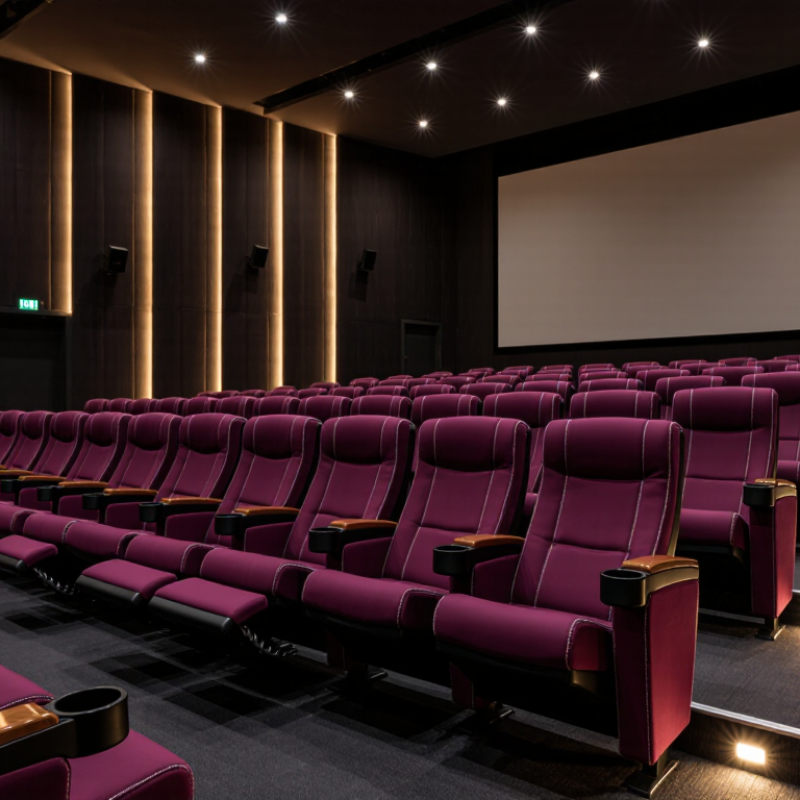
Define your cinema seating requirements before comparing manufacturers. Start with the room: record its dimensions, screen position, aisle locations, and planned seat count. Then consider how guests will use the space. A family cinema may need durable, easy-to-clean upholstery, while a premium room may prioritize wider seats and reclining features. Measure row spacing carefully. A comfortable seat can still obstruct movement when installed too close to the next row.
Tips: Request dimensioned drawings and a physical sample. Check the seat’s width, armrest shape, fabric texture, and cleaning instructions. Small details matter.
Write down your priorities in order: comfort, capacity, maintenance, appearance, and budget. Decide which features are essential and which can be adjusted. Ask manufacturers how they handle replacement parts, installation guidance, and product warranties. Compare answers against your actual operating needs, not just a brochure. In project planning, teams sometimes focus heavily on seat style and overlook cleaning time or the space needed for recline. That is easy to do. Review the layout with staff who will maintain the room, and leave room for practical feedback before confirming specifications. A perfect checklist is unlikely; revise it when measurements or user feedback reveal a mismatch.
Assess Each Manufacturer’s Experience and Production Capabilities
A manufacturer’s experience should be visible in its completed cinema projects, not just its catalog. Ask how many venues it has supplied, what seating layouts it has handled, and whether it can share installation references. The Motion Picture Association’s 2023 THEME Report puts global box-office revenue at $33.9 billion, up 30% from 2022. That recovery makes reliable seating supply important, but demand alone does not prove a factory can deliver consistent quality.
Look beyond years in business. Visit the production floor, if possible, and check how frames are welded, foam is cut, and upholstery seams are inspected. Ask for production capacity, lead times, material traceability, and inspection records for a recent batch. A detailed answer matters. A polished showroom can still hide weak quality controls, and I would not rely on a single sample chair. Ask how the maker handles defects and replacement parts after installation.
Tips: Request a sample, a written quality-control checklist, and references from comparable venues. Confirm that the quoted lead time includes testing and packing. If the factory cannot explain how it manages a rush order, that is worth questioning.
Compare Seating Design, Materials, Safety, and Durability
When comparing cinema seating manufacturers, examine the design in a full-size sample, not just a rendering. Check seat width, back support, armrest height, and aisle clearance against your floor plan. Sit for at least twenty minutes; pressure at the lower back may not appear during a quick showroom visit. Comfort is measurable.
Materials affect both appearance and upkeep. Ask for upholstery abrasion results, foam density, and guidance on cleaning agents. Run a damp cloth over a sample and inspect seams, stitching, and color transfer. Metal frames and moving parts should feel stable, with no sharp edges or uneven motion. A polished finish can hide weak construction, so look beneath it.
Safety documentation matters. Request load ratings, anchoring details, and fire-performance records relevant to your venue. Confirm how seats attach to different floor surfaces and how staff can inspect or replace components. For durability, ask about cycle testing, warranty exclusions, spare-part availability, and expected maintenance. Test a recliner repeatedly, including its return mechanism. It is easy to focus on comfort and overlook repair access; that trade-off deserves another look. A reliable manufacturer should answer technical questions clearly and provide traceable documents, not vague assurances.
How to Choose the Best Cinema Seating Manufacturers? - Compare Seating Design, Materials, Safety, and Durability
| Seating configuration | Design and space use | Materials to compare | Safety and compliance checks | Durability evidence to request | Typical suitability |
|---|---|---|---|---|---|
| Fixed-back rocker seating | Compact rows with a tip-up seat; compare seat width, row pitch, armrest layout, and sightlines using the actual auditorium plan. | Compare steel frame construction, resilient foam, and upholstery options such as woven fabric or coated synthetic material. Ask for cleaning and care instructions. | Check pinch points around moving seats, secure floor anchorage, stable operation, and clear aisles. Confirm fire-performance documentation against the codes applicable to the project. | Request test reports for seat and back durability, mechanism cycling, upholstery abrasion, and frame or anchorage performance. Check warranty terms and replacement-part availability. | A common option for high-capacity auditoriums where efficient row spacing and straightforward maintenance are priorities. |
| Premium reclining seating | Reclining backs and footrests need additional clearance. Confirm open and closed dimensions, row spacing, access to controls, and cleaning access beneath and between seats. | Examine the recline mechanism, frame, foam support, upholstery seams, and any motor or electrical components. Compare repairable upholstery and replaceable components. | Review pinch and entrapment protection, controlled movement, wiring and electrical documentation where powered features are fitted, and aisle-clearance plans in all seat positions. | Ask for documented cycle testing of recline mechanisms, seat-load testing, electrical safety documentation for powered models, and service procedures for motors and controls. | Suitable for venues prioritizing a spacious, premium experience and able to accommodate larger seat footprints and maintenance needs. |
| High-back fixed seating | A taller back can provide additional support, but may affect sightlines and row spacing. Review seat-back height and viewing angles in a scaled layout or mock-up. | Compare frame stiffness, foam resilience, upholstery backing, and the cleanability of seams and surfaces. Request material samples for hands-on evaluation. | Verify anchorage, stability, aisle access, and the required fire-performance documentation for the complete seat construction, not just the fabric in isolation. | Look for independent or clearly documented testing of structural loads, repeated use, upholstery wear, and cleaning-agent compatibility. | Useful where comfort and back support are priorities and the room layout can accommodate the chosen seat height and depth. |
| Accessible and companion seating | Plan wheelchair spaces and companion seats as part of the auditorium layout. Confirm locations, viewing angles, routes, and transfer options with the project’s accessibility requirements. | Compare the companion seat’s construction and upholstery with the main seating, and specify durable finishes that can be cleaned using the venue’s approved methods. | Check applicable accessibility rules for space quantity and distribution, clear floor space, accessible routes, and companion seating. Requirements vary by jurisdiction. | Request the same structural and upholstery test evidence as for other seats, plus confirmation that the proposed layout preserves accessible routes and clear spaces. | Essential for inclusive auditorium planning; final quantities and locations should be confirmed against local regulations and the project design. |
Evaluation note: Seat dimensions, fire requirements, accessibility rules, and test methods vary by market and project. Compare like-for-like technical documents, inspect a sample, and confirm that the proposed seating meets the applicable local requirements.
Review Customization, Delivery, Installation, and After-Sales Support
When comparing cinema seating manufacturers, assess the whole project, not just the upholstery sample. Ask for dimensioned drawings showing seat width, row pitch, aisle access, and sightlines. Custom options should fit the room plan and audience needs, including accessible seating locations. A sample can still mislead: fabric may look different under dim auditorium lighting, and late layout changes can disrupt production. Small details matter. Request a full-size mock-up when possible, plus written specifications for materials, finishes, and cleaning.
Delivery and installation deserve the same scrutiny. Ask for a dated production schedule, shipment quantities, packaging plans, and a named contact for delays. AVIXA’s 2024 Industry Outlook and Trends Analysis projected global professional audiovisual revenue of about $325 billion for 2024, underscoring how much coordination complex venue projects can require. Confirm that installers will check floor conditions, anchor positions, and sightlines before fixing every row. After handover, get warranty terms, replacement-part availability, and response targets in writing. PwC’s 2018 Future of Customer Experience survey found that 73% of consumers considered experience an important purchasing factor; dependable support matters after the seats are installed, too. Ask for evidence. One detail is easy to miss: who handles a damaged seat discovered after opening?
How to Choose the Best Cinema Seating Manufacturer
Suggested evaluation weighting for comparing customization, delivery, installation, and after-sales support.
Use these proposed weights as a starting point, then adjust them to match your project. Compare written specifications, confirmed lead times, installation plans, and warranty terms across suppliers; the percentages are a planning framework, not survey results.
Evaluate Quotes and Select the Best-Fit Manufacturer
Evaluate quotes by comparing the same seating specification, not just the final price. Check seat width, row spacing, upholstery grade, frame material, and fire-performance documentation. Ask whether installation, freight, spare parts, and warranty service are included. A low quote can hide costly exclusions. Request a sample or finish swatch, then inspect stitching, foam recovery, and moving parts under normal use. Small details matter.
Tips: Build a simple comparison sheet. Record unit price, lead time, payment milestones, warranty coverage, and response time. Ask each manufacturer to price one identical layout. If a quote is vague, request written clarification before comparing it.
Choose the manufacturer that fits your venue and operating needs, not merely your budget. A compact theater may prioritize clear sightlines and easy cleaning, while a premium auditorium may need wider seats and quieter mechanisms. Verify production capacity and ask for references from projects with similar layouts. Confirm how changes affect cost and delivery dates. I would not treat a polished sample as proof of consistent production; ask how quality checks are recorded. No checklist removes every risk, but clear specifications make surprises less likely.
