
What Are the Best Timber Window Manufacturers in China?
When buyers search for the best timber window manufacturers in China, they need more than a polished catalogue. Window performance depends on the timber species, moisture control, joinery, hardware, and finish. Small details matter. A neat sample may look convincing, yet reveal little about how a frame performs after years of changing weather. Buyers should ask how manufacturers control timber moisture and protect exposed edges. Request product specifications, relevant test reports, warranty terms, and references for comparable projects. Proof matters. Factory visits or live production discussions can also help verify whether a supplier’s processes match its claims.
A useful comparison considers more than price. Confirm whether dimensions, glazing options, opening styles, and finishes can be tailored to the project. Check how the manufacturer handles drawings, sample approval, packaging, and quality checks before shipment. Then compare quotations on the same specifications. Not every supplier will provide equally detailed evidence, and that can make comparisons less certain. Even experienced buyers can place too much weight on a showroom sample; it is worth asking what the sample does not show. This guide explores manufacturers of timber windows in China through practical criteria, including product range, documented quality practices, customization, and communication. It does not assume one factory suits every project. The strongest choice is the one that can support its claims with clear records and consistent answers.
What Defines a High-Quality Timber Window Manufacturer?
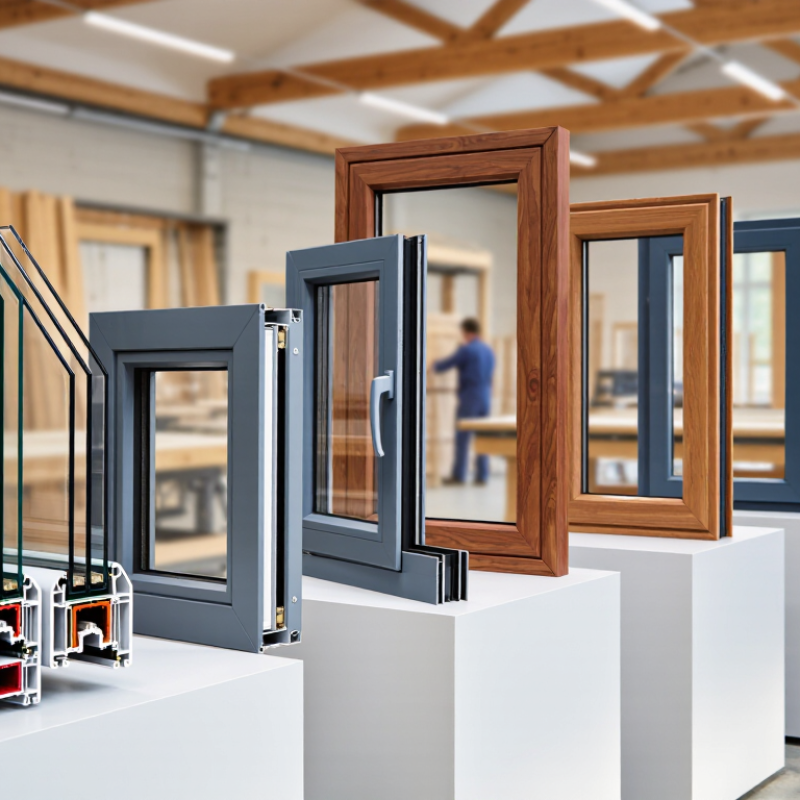
A high-quality timber window manufacturer controls the material before it reaches the assembly line. Ask how timber is selected, dried, and stored. The details matter. Moisture readings should be checked across batches, not guessed from a dry-looking surface. Poorly dried wood can twist after installation, leaving a sash that sticks or a narrow gap that admits rain.
Look closely at the joints and finish. Tight, consistent joinery helps limit water entry, while a coating should cover edges and end grain, not just visible faces. A manufacturer should explain its glazing options, seals, hardware, and quality checks in clear terms. Sample windows can reveal details that a polished catalogue hides. Feel the sash, inspect the corners, and check whether the seals sit evenly.
Reliable manufacturers also provide measurable information: timber specifications, test records where available, warranty terms, and guidance for installation and maintenance. Ask how they handle defects and whether replacement parts can be supplied later. A careful factory may share production photos or inspection records, but these are not substitutes for independent checks. No process is flawless. Even a capable manufacturer can miss a defect, so clear inspection steps and honest communication matter as much as impressive equipment.
Key Criteria for Evaluating Chinese Timber Window Manufacturers
Price alone tells little about a timber window manufacturer. Compare timber species, laminated-section construction, moisture control, and finish thickness. Ask how factory staff measure timber moisture before machining and how they protect exposed end grain. These details affect stability after shipment. The U.S. Department of Energy’s Energy Saver guidance estimates that heat gain and loss through windows account for 25–30% of residential heating and cooling energy use. That makes verified performance more useful than claims such as “high efficiency.”
Request test reports for the exact window configuration, including glazing, frame size, and hardware. Check U-factor, solar heat gain, air leakage, water penetration, and structural performance against standards required in the destination market. A certificate for a different glass package may not apply. Look for production records, inspection procedures, and clear warranty terms. Ask whether timber is traceable to responsibly managed sources, and request supporting documentation.
Inspect a full-size sample, not only a polished corner. Check the sash alignment, seal compression, drainage slots, and paint coverage around joints. I would not treat a neat sample as proof; that is an easy mistake. Ask for recent export references and packaging details, too. Windows can look excellent in a showroom, then arrive with damaged edges or inconsistent hardware. Be cautious where answers are vague.
What Are the Best Timber Window Manufacturers in China? - Key Criteria for Evaluating Chinese Timber Window Manufacturers
| Evaluation criterion | What to check | Useful evidence | Good evaluation signal |
|---|---|---|---|
| Destination-market compliance | Confirm that the proposed window system meets the regulations and product requirements in the intended sales market. | Applicable test reports, declarations, product specifications, and supporting documentation for the destination market. | Documents identify the tested product configuration and are relevant to the project’s market and requirements. |
| Tested performance | Review air permeability, water-tightness, wind resistance, thermal performance, and acoustic performance where required. | Reports from a qualified testing body that state the standard, test results, specimen size, glazing, hardware, and configuration. | Results are measurable, traceable, and appropriate for the building location and project specification; no single rating is suitable for every project. |
| Timber selection and sourcing | Ask for the timber species, grade, joining method, moisture-control process, and sourcing information. | Material specifications, purchasing records, production controls, and valid chain-of-custody documentation where certified sourcing is claimed. | The supplier explains how timber is selected and controlled, and can substantiate any sustainability or certification claims. |
| Construction and weather protection | Inspect frame and sash joints, drainage paths, glazing details, seals, coatings, and protection of exposed timber surfaces. | Section drawings, finishing specifications, process photographs, and a physical sample or production inspection. | Details are consistent with the tested configuration and suited to the project’s exposure and maintenance conditions. |
| Glazing and hardware compatibility | Check glass type and thickness, glazing method, opening style, hardware capacity, and availability of replacement components. | Bill of materials, hardware specifications, glazing details, and written confirmation of the tested assembly. | The proposed components suit the sash size, weight, safety requirements, and operating conditions. |
| Quality-management controls | Assess incoming-material checks, production inspections, measurement tolerances, nonconformance handling, and final inspection. | Quality procedures, inspection records, calibration records, and an in-date management-system certificate if one is claimed. | The supplier can show how quality is controlled throughout production; a management certificate alone does not prove window performance. |
| Customization and technical support | Verify capacity for project dimensions, profiles, finishes, glazing, opening types, and required shop drawings. | Approved drawings, sample approvals, written technical responses, and a documented change-control process. | Design changes are reviewed for compatibility with tested performance and clearly approved before production. |
| Export packaging and logistics | Review protection against moisture, impact, abrasion, and handling damage, as well as packing identification and shipping arrangements. | Packing specifications, loading plan, shipping marks, and agreed inspection or handover records. | Packaging and responsibilities are specified in writing and match the transport route and delivery terms. |
| Warranty and after-sales service | Clarify warranty coverage, exclusions, claim process, response time, spare parts, and maintenance obligations. | Written warranty terms, maintenance instructions, and named service contacts or agreed support channels. | Terms define coverage and responsibilities clearly and are practical for the buyer’s location. |
| Commercial transparency | Compare scope, exclusions, tooling or sample charges, payment milestones, production schedule, and change or cancellation terms. | Itemized quotation, agreed specification, delivery schedule, and signed contract or purchase order. | The quotation matches the technical specification and makes costs, responsibilities, and delivery assumptions explicit. |
Evaluation note: Request evidence for the exact window system and configuration being quoted. Performance can vary with dimensions, glazing, hardware, installation, and the applicable test method.
Notable Timber Window Manufacturers in China
China’s timber window manufacturers generally include solid-wood specialists, engineered-wood producers, and wood-aluminium fabricators. Their differences show in frame depth, corner joints, finishes, and glazing options—not just catalogue photos. Ask for full-size samples and documented air, water, and wind-pressure test results. A polished showroom corner proves little.
Performance deserves equal attention. The International Energy Agency reported that buildings used about 30% of global final energy in 2022 and accounted for 26% of energy-related emissions. Window design can affect heat loss, comfort, and energy use. Compare U-values using the same test method, and check timber species, moisture controls, warranty terms, and export packaging. Ask for project references from climates similar to yours. These details can be awkward to verify, but they matter.
Tips: Clarify whether “timber” means solid wood or laminated components. Ask how coating maintenance is specified, and confirm test reports match the proposed window size and opening style. Small details matter.
Comparing Product Range, Certifications, and Customization
Timber window manufacturers in China can differ greatly in product range. Some focus on standard casement and sliding windows, while others offer tilt-turn designs, timber-aluminum combinations, and varied glazing options. For example, compare frame depth, wood species, opening direction, and available finishes. Details matter. A broad catalog is useful only if the factory can produce the specified design consistently.
Certifications and test records deserve careful checking. ISO 9001 indicates a quality-management system, but it does not prove that every window meets a project’s performance needs. Ask for proof. Request current certificates and test reports for relevant items, such as air leakage, water resistance, and wind-load performance. Confirm that the tested model matches the proposed frame, glass, and hardware. Requirements vary by destination market, so vague claims are not enough.
Customization may cover dimensions, glazing, hardware, coatings, and profiles, but each change can affect lead time and cost. Share drawings and project conditions, including exposure to rain or strong sun, before comparing quotations. Ask whether the manufacturer can provide a physical finish sample and a production drawing for approval. I would not treat the widest catalog as the strongest offer; too many options can obscure gaps in documentation. A sample helps, but it cannot reveal every issue that may appear during installation.
How to Choose a Manufacturer for Your Project
Choosing a timber window manufacturer starts with your project, not a catalogue. Define opening sizes, exposure, target U-values, finish, and service life before comparing quotations. Ask for recent, third-party test reports covering air leakage, water penetration, and wind resistance. Request the tested specimen’s size and configuration; results may not transfer to your exact design. The U.S. Department of Energy’s Energy Saver guidance estimates that windows account for 25–30% of home heating and cooling energy use. This makes glazing, seals, and installation details part of the performance conversation. Details matter.
Check timber species, kiln-drying records, moisture limits, joint controls, coating schedules, and repair instructions. Ask whether the factory provides batch traceability and recognized chain-of-custody documents. FAO’s Global Forest Resources Assessment 2020 reports that forests cover about 31% of the world’s land area; broad supply does not guarantee responsible sourcing. Request a production sample, packaging photos, and a written defect-response process before placing a deposit. Compare lead times and replacement-part availability, not just unit price. One uncomfortable truth: a flawless showroom sample tells you little about year-round quality control. Small gaps matter. Arrange a factory audit when feasible, and treat clear records and prompt technical answers as equally important evidence.
What Are the Best Timber Window Manufacturers in China?
How to choose a manufacturer for your project: compare suppliers against the requirements that matter most to your building.
How to use this chart: These are suggested project-planning weights, not market-survey results or manufacturer ratings. Adjust them to suit your climate, building specifications, budget, and local compliance requirements, then score each shortlisted supplier using documented evidence.
Related Posts
-
China Top Timber Windows Manufacturers and Suppliers?
-
2026 Top Timber Windows Suppliers for Global Buyers
-
How to Choose the Best Timber Windows for Your Home?
-

2025 Guide: How to Choose Timber Windows for Your Home Renovation
-
Top 10 Benefits of Timber Windows for Global Buyers?
-
2026 Top Wooden Sash Windows Suppliers for Global Buyers