2026 Top UPVC Doors What Global Buyers Should Know?

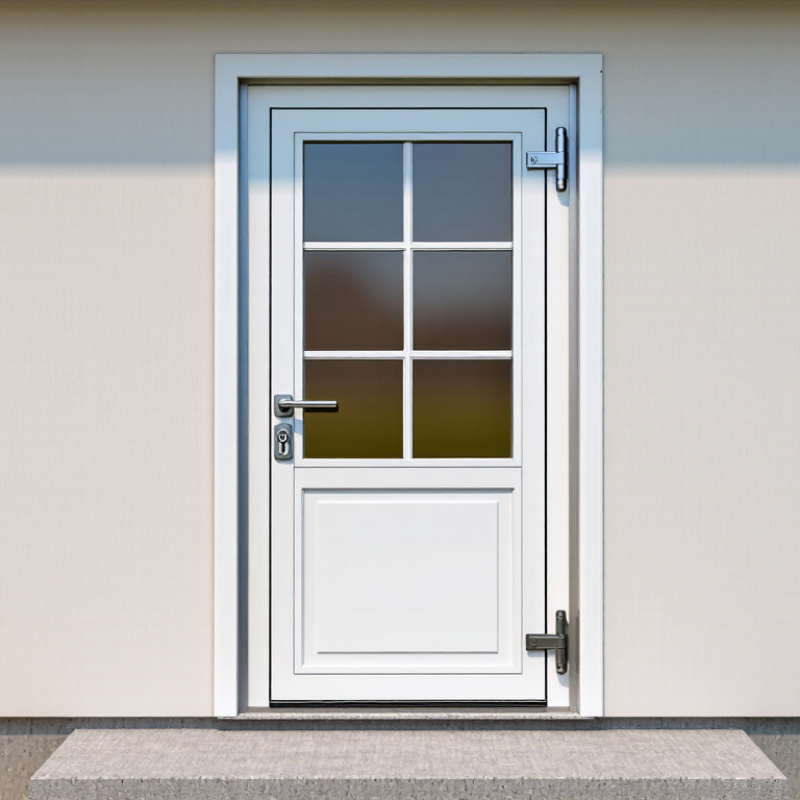
In 2026, global buyers are looking beyond attractive finishes when choosing upvc doors. They want reliable performance, clear specifications, and practical value. A white entrance door may look simple, yet its quality depends on profile design, reinforcement, hardware, glazing, and installation.

This guide examines the details that experienced purchasers should verify before placing an order. It considers thermal insulation, weather resistance, security features, sound reduction, maintenance needs, and expected service life. Certification can support confidence, but it does not replace careful supplier evaluation. Buyers should request test reports, product drawings, warranty terms, and installation guidance. Small details matter. A weak hinge or poorly sealed threshold can reduce performance quickly.

Regional conditions also influence the right choice. Coastal homes may need stronger corrosion protection, while colder markets require better frame and glass specifications. Large doors may need additional reinforcement. This point is sometimes overlooked. Even experienced buyers can focus too heavily on price, color, or delivery time. That approach can create expensive problems later.

The discussion also recognizes an important limitation: product claims are not always directly comparable across countries. Testing methods, climate conditions, and installation standards may differ. Therefore, this article uses practical purchasing questions rather than broad promises. It aims to help importers, developers, distributors, and homeowners compare suppliers with greater confidence. Reliable decisions come from evidence, realistic expectations, and attention to details often hidden in a product brochure.

2026 Top UPVC Doors What Global Buyers Should Know?

What Are UPVC Doors and Why Are They Important in 2026?

UPVC doors are made from unplasticized polyvinyl chloride, a rigid material reinforced with internal chambers and steel or composite supports. Unlike timber, UPVC does not absorb rainwater, rot, or require frequent repainting. Its smooth frame also makes cleaning simple: a damp cloth usually removes dust and road residue. In 2026, these practical details matter as buyers compare durability, energy performance, and maintenance costs.

The United Nations Environment Programme reported that buildings used about 32% of global energy and produced 34% of global carbon emissions in 2022. Doors alone cannot solve this problem, but airtight frames and insulated panels can reduce drafts around common leakage points. The U.S. Department of Energy estimates that windows account for roughly 25–30% of residential heating and cooling energy use. Doors are not windows, yet poorly sealed entrance systems can create similar comfort losses.

Professional buyers should check U-values, air-leakage results, locking performance, drainage design, and installation quality. A low advertised U-value means little if the frame is badly fitted. This is often overlooked. Independent test certificates provide stronger evidence than showroom claims. Recycled-content statements also need careful review because material quality and end-of-life recovery vary by region. UPVC doors can be cost-effective, but climate, exposure, and local repair access still influence their real service life.

How Do UPVC Doors Compare with Other Door Materials?

UPVC doors offer a practical balance of insulation, cost, and maintenance. Their multi-chamber frames reduce heat transfer around busy entrances. In cold climates, this can help rooms feel less drafty. They also resist moisture, so rain will not cause swelling or rot. Cleaning usually needs only mild soap and water. That matters for apartments, coastal homes, and rental properties with limited upkeep time.

Wood doors provide warmth and strong visual character, but they need regular sealing. Without proper protection, moisture can warp the frame or damage the finish. Aluminum doors are slim and durable, yet basic models may transfer heat quickly. Thermal breaks improve them, but they can raise the purchase price. Steel doors deliver excellent security and impact resistance. However, scratches may expose areas that later develop corrosion. UPVC is lighter than steel and usually easier to install.

The details still matter. A poorly fitted UPVC door can leak air despite good frame insulation. Check hinge strength, drainage holes, glazing quality, and locking points before ordering. Very dark UPVC finishes may expand in intense sunlight. I would also avoid choosing only by the lowest quote. Cheap hardware can loosen, and replacement parts may be difficult to source. UPVC is not perfect, especially where heavy impact or premium natural materials matter. But for many homes, its steady performance remains convincing.

What Features Should Global Buyers Evaluate Before Purchasing?

Global buyers should evaluate UPVC doors as complete systems, not attractive panels. The 2023 UNEP Global Status Report states that buildings consume about 34% of global energy. Door performance therefore deserves careful attention. Check the declared U-value, air-permeability class, water-tightness rating, and wind-load resistance. These figures should come from independent testing, preferably under recognised EN or ISO methods.

A low U-value alone can mislead. Weak installation may create cold bridges around the frame. Ask for tested whole-door performance, not only the glass or profile data. Multi-chamber profiles, welded corners, continuous gaskets, and correctly reinforced frames improve stability. In coastal or high-UV regions, buyers should also examine weathering tests, drainage design, corrosion-resistant hardware, and colour-retention evidence. Small details matter.

Security needs practical evaluation. Review the cylinder, hinges, locking points, laminated glazing, and resistance-test documentation. The hardware should remain usable after repeated cycles. Experienced installers often identify problems that catalogues hide, especially poor alignment and inadequate anchoring. Request installation tolerances and maintenance guidance before purchasing. ISO 10077 thermal calculations can support comparisons, while independent certification improves reliability. Still, no specification is perfect. A door designed for a cool, dry climate may perform poorly in tropical humidity or strong coastal winds. Global buyers should compare test conditions with the building site, delivery route, and local climate.

How Are UPVC Doors Manufactured, Tested, and Certified?

A dependable UPVC door begins with controlled raw materials, not attractive photographs. Manufacturers blend UPVC resin with stabilizers, impact modifiers, pigments, and weather-resistant additives. The compound is heated and pushed through shaped dies to form the door profiles. After cooling, profiles are cut to accurate lengths. Steel reinforcement is inserted where strength demands it. Corners are welded, cleaned, and checked for alignment. Glazing seals, hinges, locks, and drainage paths are fitted during assembly. Small gaps matter.

Testing should reflect the conditions of the installation market. Accredited laboratories may assess air permeability, water tightness, wind resistance, operating force, thermal performance, acoustic insulation, and impact resistance. Test samples must represent normal production, not specially prepared units. Factory inspectors also check weld quality, frame dimensions, seal compression, glass clearance, and hardware operation. A door can pass one test and still perform poorly elsewhere. Numbers need context.

Certification depends on the destination country and product configuration. Buyers should request current test reports, certification scope, factory production-control records, and batch traceability documents. Reports should identify the exact profile system, reinforcement, glazing, dimensions, and hardware tested. A certificate for one design may not cover another. During a practical factory audit, inconsistent records often reveal more than polished brochures. Manufacturers should retain calibration records and investigate failed inspections instead of hiding them. This slower discipline builds evidence that buyers can trust.

2026 Top UPVC Doors What Global Buyers Should Know? – How Are UPVC Doors Manufactured, Tested, and Certified?
Manufacturing, Testing or Certification Dimension Typical Data or Requirement Why It Matters to Global Buyers Common Reference Standards or Records
1. Material Selection Unplasticized polyvinyl chloride (uPVC/PVC-U) profile compound, impact modifiers, stabilizers, pigments, seals, steel reinforcement and glazing components are selected according to the intended climate and door design. Material formulation affects weather resistance, color retention, impact performance, dimensional stability and service life. Profile requirements are commonly evaluated against EN 12608-1 or an applicable national equivalent. The exact formulation is normally verified through technical data sheets and test reports.
2. Profile Extrusion PVC compound is heated, homogenized and forced through a die to form frame, sash, threshold and glazing profiles. Typical extrusion conditions are process-specific and must be controlled by the profile manufacturer. Stable extrusion controls help prevent warping, surface defects, inconsistent wall thickness and poor welding performance. Quality records may include compound batch number, extrusion temperature profile, line speed, dimensional inspection and surface inspection.
3. Profile Quality Control Typical checks include profile dimensions, wall thickness, color, surface finish, mass per unit length, impact behavior and heat-reversion or dimensional-stability performance where specified. Consistent profiles are necessary for accurate assembly, reliable sealing and repeatable thermal and weather performance. EN 12608-1 is widely used for PVC-U profiles for the fabrication of windows and doors; national standards may apply instead.
4. Steel Reinforcement Galvanized steel reinforcement may be inserted into the main frame and sash profiles. The required section, thickness, fixing pattern and corrosion protection depend on door size, wind exposure and structural design. Reinforcement limits deflection and helps maintain hardware alignment, corner strength and weather-seal compression. Buyers should request reinforcement specifications, corrosion-protection details, fixing spacing and structural calculations where required.
5. Cutting and Corner Welding Profiles are normally cut to programmed lengths, mitred and fusion-welded at the corners. Welding temperature, pressure, heating time and cooling time are controlled according to the profile system. Correct welding produces strong, sealed corners. Poor settings can cause weak joints, excessive welding beads, distortion or leakage. Factory records commonly include cutting tolerances, welding parameters, corner appearance and weld-strength inspection.
6. Panel, Glass and Hardware Assembly Assembly may include insulated glazing units, opaque insulated panels, gaskets, hinges, locks, handles, drainage components, thresholds and restrictors. Glass configuration, hardware adjustment and drainage design have a direct effect on security, thermal performance, operation and water resistance. Insulating glass units may be assessed under EN 1279 or an applicable national standard. Hardware should be suitable for the door weight and operating cycles.
7. Dimensional and Visual Inspection Typical checks cover overall width and height, squareness, diagonals, sash clearance, gasket continuity, drainage paths, surface finish, glazing location and hardware operation. Dimensional accuracy reduces installation problems and helps the finished door achieve the performance shown in test documentation. Inspection records should identify the product size, batch, inspector, measured values and acceptance criteria.
8. Air Permeability Test The assembled door is subjected to controlled positive and negative air-pressure differences. Results are commonly expressed as leakage rate and classification. Lower air leakage generally improves comfort, energy efficiency and resistance to drafts, subject to correct installation. EN 1026 provides the test method and EN 12207 provides classification. Other markets may use national or regional equivalents.
9. Watertightness Test Water is sprayed onto the external face while pressure is increased in steps. The result is reported as a water-tightness class or pressure level. It indicates how well the door resists wind-driven rain when correctly installed and drained. EN 1027 provides the test method and EN 12208 provides classification. Installation details can significantly change field performance.
10. Wind Load Resistance The door is exposed to positive and negative pressure cycles. Deflection, operational condition and damage are evaluated after testing. Wind performance is especially important for large door leaves, tall openings, coastal areas and high-rise applications. EN 12211 provides the test method and EN 12210 provides classification. The required class depends on building height, exposure and local design rules.
11. Thermal Performance Thermal transmittance is reported as U-value in W/(m²·K). A typical modern insulated uPVC door may achieve approximately 0.8–1.6 W/(m²·K), depending on size, frame, threshold, panel and glazing. A lower U-value generally indicates lower heat transfer, but the quoted value must identify whether it applies to the panel, glazing, frame or complete door. EN ISO 10077-1 and EN ISO 10077-2 are commonly used for calculated thermal transmittance; EN 12567-1 may be used for hot-box measurement of doors and windows.
12. Acoustic Performance Sound reduction is reported in decibels, often as weighted sound reduction index values. Results depend strongly on glazing, panel construction, seals, frame joints and installation. Buyers should compare complete-door test results rather than relying only on the acoustic rating of the glass. ISO 10140 and ISO 717-1 are commonly referenced for laboratory airborne sound insulation testing and rating.
13. Mechanical Operation and Durability Doors may be cycled repeatedly to assess opening, closing, locking, hinge and hardware performance. The required cycle count depends on product type and applicable standard. Durability testing helps identify premature wear, sash drop, lock failure and loss of sealing pressure. EN 1191 and EN 12400 are commonly associated with durability testing and classification for windows and pedestrian doorsets, where applicable.
14. Impact and Safety Checks Depending on design and market, testing may address soft-body or hard-body impact, glass breakage behavior, finger protection, threshold safety and glazing retention. These checks help reduce injury risk and confirm that the door remains safe after foreseeable impact. Applicable requirements vary by country, building type and door location. Safety-glazing documentation should identify glass type, thickness and test basis.
15. Weathering and Color Retention Profiles and finishes may be evaluated for artificial or natural weather exposure, including color change, gloss loss, cracking, chalking and surface deterioration. UV exposure, heat, humidity and coastal conditions can affect appearance and long-term material performance. ISO 4892-2 or ISO 4892-3 may be used for laboratory weathering methods; the required exposure and acceptance criteria depend on the product specification.
16. Fire and Smoke Requirements Most standard uPVC pedestrian doors are not automatically fire doors. Where a fire-rated doorset is required, the complete doorset must be designed and tested as a fire-resisting assembly. Fire performance cannot be inferred from the PVC profile or glass alone. The frame, leaf, hardware, seals, glazing and installation must match the tested configuration. Applicable systems may include EN 1634-1 and EN 13501-2 or the relevant local fire regulations and test methods.
17. Security Performance Security depends on the complete doorset, including multi-point locking, cylinder, hinges, reinforcement, glazing retention, frame fixing and installation. A high-security lock alone does not prove resistance of the complete door to forced entry. EN 1627–EN 1630 are commonly used for burglar-resistance classification and testing in applicable European projects. Local requirements may differ.
18. Product Certification and Declaration Certification is market-specific. A conformity or performance document should identify the product scope, dimensions, tested configuration, performance results, manufacturing controls and validity conditions. Buyers can confirm whether the documentation applies to the exact profile system, glazing, hardware, size and installation method being ordered. For European projects, EN 14351-1 is a key product standard for windows and external pedestrian doorsets where applicable. Other markets may require local conformity assessment.
19. Factory Production Control A documented system typically controls incoming materials, production parameters, calibration, nonconforming products, traceability, final inspection, complaints and corrective actions. Factory production control supports consistent output between the tested sample and routine production. Request the quality manual summary, inspection plan, calibration records, batch traceability and recent third-party laboratory reports.
20. Buyer Documentation Checklist Technical drawings Bill of materials Test reports Performance declaration Installation instructions Maintenance instructions Warranty terms Complete documentation allows the importer, architect, installer and inspector to verify performance and installation requirements before shipment. All reports should show the laboratory, test date, specimen description, dimensions, configuration, standard edition and result classification.

Important: Performance values are indicative ranges or typical evaluation items, not universal guarantees. Required classes, certification routes and legal obligations depend on the destination country, building code, product size, installation method and project specification.

How Can Buyers Choose Reliable UPVC Door Suppliers Worldwide?

2026 Top UPVC Doors: What Global Buyers Should Know

Choosing a reliable UPVC door supplier requires more than comparing online prices. I have found that experienced buyers inspect profile quality, steel reinforcement, glazing, seals, and drainage design. A strong supplier should provide clear technical drawings, test reports, factory photos, and consistent product specifications. Ask how the doors perform in your climate. Coastal air, intense sunlight, and freezing temperatures can expose weak materials quickly.

Request physical samples before placing a large order. Check frame corners, lock operation, gasket flexibility, and surface finishing by hand. Confirm production capacity, quality-control steps, packaging methods, and replacement procedures. A dependable supplier answers specific questions without vague promises. However, no supplier is perfect. One overlooked measurement can delay an entire shipment, even when the factory appears professional. Buyers should also verify delivery terms, payment milestones, warranty conditions, and import documentation with qualified local advisors.

Tips: Compare at least three suppliers using the same specification sheet. Ask for recent project references and contact them directly. Require pre-shipment inspection photos, but do not treat photos as final proof. A small trial order often reveals communication gaps, color differences, or packaging weaknesses before larger investment. Keep every drawing, approval, and agreed tolerance in writing.