2026 Top Types of Aluminium Doors for Global Buyers

Choosing the right aluminium doors in 2026 requires more than comparing prices, colours, and frame thickness. Global buyers now examine climate, building use, security, energy performance, maintenance, and installation quality. A coastal hotel may need marine-grade finishes, while a cold-climate home needs thermally broken frames and reliable gaskets. A busy retail entrance needs stronger hinges and tested hardware. The same door cannot serve every project.

Ove Arup, the respected engineer and founder of Arup, once said, “Engineering is not a science. It is an art.” His words remain useful here. Good aluminium doors balance structure, daylight, ventilation, weather protection, and visual proportion. Sliding doors create wide openings for homes and hospitality spaces. Folding systems support flexible layouts. Hinged, pivot, lift-and-slide, and automatic doors suit different traffic patterns. Fire-rated and impact-resistant options may also be necessary, depending on the building and local requirements.

This guide examines the top types of aluminium doors for global buyers in 2026. It considers practical details, including frame depth, glass configuration, drainage paths, threshold design, thermal breaks, finish durability, and replacement support. However, product labels can mislead. “Premium” does not always mean better. A beautiful door may still leak air or water when poorly installed. I may also favor technical performance too strongly; appearance and user comfort matter equally. Buyers should request test reports, warranty terms, project references, and installation guidance before placing an order. Small details decide long-term value.
2026 Top Types of Aluminium Doors for Global Buyers

What Are Aluminium Doors and Why Are They Important for Global Buyers?

What Are Aluminium Doors and Why Are They Important for Global Buyers?

Aluminium doors use lightweight, corrosion-resistant frames to support glass, panels, hinges, and locking hardware. Their strength allows slimmer profiles and wider openings than many traditional materials. A full-height sliding door can bring daylight into a coastal apartment, while a thermally broken frame helps reduce indoor heat transfer.

Their relevance is growing as buildings face stricter energy expectations. The United Nations Environment Programme reported in its 2024 Global Status Report that buildings consumed about 32% of global energy and produced approximately 34% of global energy-related emissions in 2022. Doors are not the largest source of loss, but poorly specified frames can weaken an efficient façade.

Global buyers should check whole-door U-values, air leakage, water penetration, wind resistance, and hardware durability. Glass performance matters too.

The International Aluminium Institute recorded more than 70 million tonnes of global primary aluminium production in 2023. Aluminium also supports recycling, although recycled content, alloy quality, coatings, and transport distance must be verified.

A cheap frame is not always economical. Salt air, intense sunlight, freezing temperatures, and frequent opening can expose weak specifications quickly.

I have seen projects focus on appearance first, then discover condensation around the frame. That mistake is avoidable, but product brochures rarely show the entire risk. Independent test reports and installation records deserve equal attention. Some assumptions still need challenging.

How to Classify the Main Types of Aluminium Doors

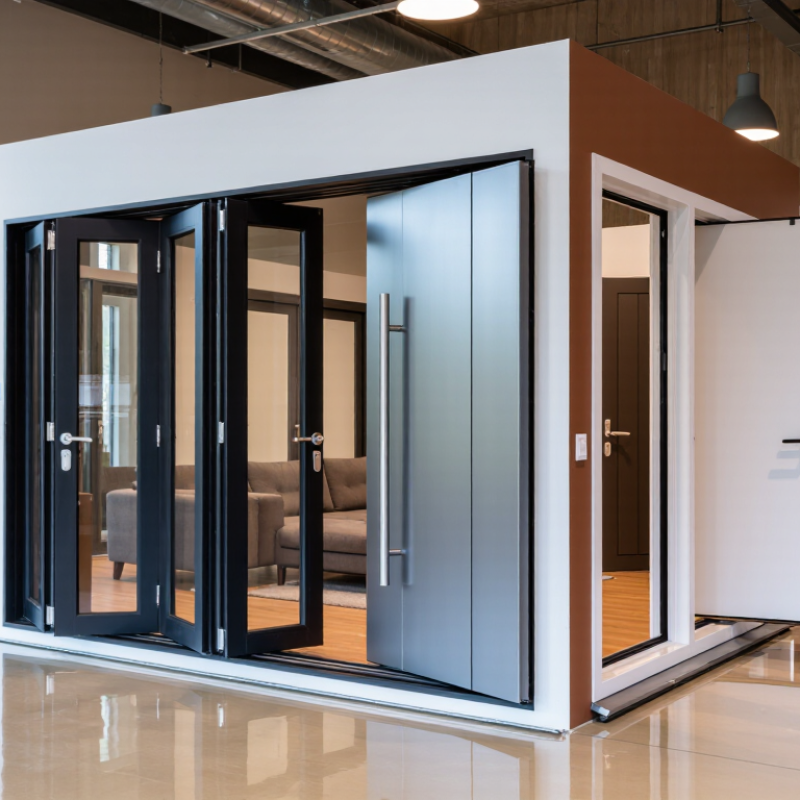
Classification starts with movement, installation, and performance. Sliding doors move on horizontal tracks and suit balconies, patios, and narrow rooms. Hinged doors open inward or outward, offering simpler sealing and hardware maintenance. Folding doors create wider openings, but their multiple panels demand accurate alignment. Lift-and-slide systems carry heavier glass with less operating force. Fixed aluminium doors are not entry doors, yet they complete façade systems and improve daylight access.

The International Aluminium Institute reports that building and construction consume roughly one quarter of global aluminium demand. That figure explains the material’s importance in façade planning. Aluminium frames are light, corrosion-resistant, and easy to customize. However, “aluminium” alone does not guarantee efficiency. Buyers should classify systems by thermal-break design, glazing thickness, drainage, air tightness, water resistance, and wind-load performance. Small details matter.

UNEP’s 2023 Global Status Report states that buildings consume about 34% of global energy and create around 37% of energy-related emissions. Door selection therefore affects more than appearance. For hot climates, specify low-solar-gain glazing and insulated frames. For cold regions, review U-values, edge spacers, and condensation risks. Coastal projects need suitable surface protection and stainless hardware. Recycled aluminium can require only about 5% of the energy used for primary production, according to the International Aluminium Institute. Still, recycled content claims need verified documentation. A cheaper door may perform poorly. A premium specification may also be unnecessary. The difficult part is matching the door type to the building, climate, and maintenance reality.

Key Features and Applications of Each Aluminium Door Type

2026 Top Types of Aluminium Doors for Global Buyers

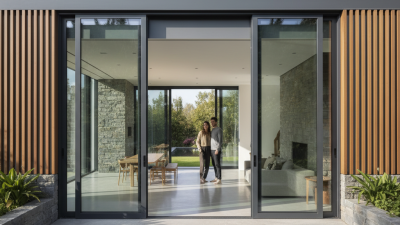
Aluminium doors serve different building needs, climates, and traffic levels. Sliding doors create wide openings with minimal floor clearance. Their slim frames suit balconies, cafés, and modern living rooms. Large glass panels also improve daylight, but they need accurate tracks and regular cleaning.

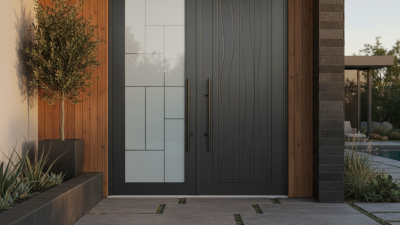
Hinged aluminium doors remain practical for entrances, offices, and utility rooms. They offer simple operation and strong sealing when fitted with quality gaskets. Thermal-break frames reduce heat transfer in air-conditioned buildings. In hot regions, low-E glass and external shading can improve comfort. A weak threshold, however, may still allow dust or rain inside.

Bi-fold doors connect interiors with gardens, terraces, and event spaces. Multiple panels fold beside the opening, leaving a broad passage. They require careful alignment, especially across wide openings. Lift-and-slide doors support heavier glass and can deliver smoother movement. They work well in hotels and high-end homes, although their hardware costs more. Louvered aluminium doors encourage airflow in plant rooms, service areas, and tropical buildings. Perforated or adjustable panels provide ventilation without fully opening the space. Coastal projects demand corrosion-resistant finishes and suitable fasteners. A slim frame looks elegant, but it may reduce structural tolerance. Experienced installers should check drainage, wind pressure, glass weight, and local energy requirements before selecting a system.

2026 Top Types of Aluminium Doors for Global Buyers

Aluminium doors are selected according to opening size, ventilation needs, space efficiency, thermal performance, and application requirements. The chart shows common application suitability for major aluminium door configurations.

How to Compare Aluminium Doors by Performance and Cost

2026 Top Types of Aluminium Doors for Global Buyers
How to Compare Aluminium Doors by Performance and Cost

Global buyers should compare casement, sliding, folding, and lift-and-slide doors by measured performance. Appearance alone can mislead. Start with thermal transmittance, air leakage, water resistance, and wind-load ratings. Lower U-values usually reduce indoor heat loss, but test conditions matter. A triple-glazed door may perform poorly if its seals are weak. Look closely. Ask for test reports, section drawings, and installation tolerances. Site experience shows that a high-rated frame can underperform after careless fitting.

Cost comparison needs more than the quoted unit price. Include glazing, hardware, finishes, packaging, freight, duties, installation, and future adjustment. A low-cost sliding door may need stronger rollers and tracks for coastal or high-traffic projects. Stainless hardware can increase the purchase price, yet it may reduce corrosion-related maintenance. Not always, though. Poor drainage or salty air can still damage unsuitable components. Request a five-year maintenance estimate and confirm spare-part availability before ordering. Currency changes and lead times also affect the real budget.

For warm climates, prioritize solar control, ventilation, and reliable seals. Colder regions need thermal breaks and condensation resistance. Safety glass, finger-safe gaps, and tested locking points should match local building requirements. Compare equal configurations, not attractive sample prices. I would record performance data in a simple table, then score each option by lifecycle cost. This method is practical, but not perfect. Installation quality remains the variable many buyers underestimate. A factory inspection, sample approval, and mock-up test can reveal alignment or drainage problems before shipment.

2026 Top Types of Aluminium Doors for Global Buyers - How to Compare Aluminium Doors by Performance and Cost

Aluminium Door Type Typical Configuration Recommended Applications Typical Maximum Panel Size1 Indicative Whole-Door U-Value2 Air / Water / Wind Performance3 Indicative Installed Cost4 Main Advantages Main Limitations Best Value For
Aluminium Hinged Door Single or double leaf; inward- or outward-opening Residential entrances, balconies, service exits and commercial interiors Approximately 1.0–1.2 m wide × 2.4–3.0 m high per leaf About 1.2–2.2 W/m²·K with thermal-break framing and insulated glass Generally high when correctly gasketed; common tested classes range from Class 3–4 air, 5A–9A water and C2–C5 wind US$350–900/m² Strong sealing, simple hardware, good security and usually the lowest purchase cost Requires clear swing space; large leaves can create high hinge and hardware loads Budget-conscious projects prioritizing weather resistance and security
Aluminium Sliding Door Two, three or four panels moving horizontally on top and bottom tracks Patios, balconies, apartments, offices and areas with limited floor space Approximately 1.0–1.8 m wide × 2.2–3.0 m high per panel About 1.5–2.8 W/m²·K with thermal-break framing and double glazing Usually moderate to high; common tested classes range from Class 2–4 air, 3A–8A water and C2–C5 wind US$450–1,100/m² Saves interior space, provides wide openings and offers a familiar, easy-to-use design Track cleaning is necessary; standard systems provide a smaller clear opening than folding or lift-slide doors General residential and light commercial projects with moderate opening sizes
Aluminium Lift-and-Slide Door Large sliding panels lifted clear of the track by a rotating handle before movement Luxury residences, hotels, coastal properties and large glazed façades Approximately 1.2–3.3 m wide × 2.5–3.5 m high per panel About 1.0–1.8 W/m²·K with thermally broken frames and low-emissivity double or triple glazing High when professionally engineered; tested performance often reaches Class 3–4 air, 7A–9A water and C3–C5 wind US$900–2,200/m² Handles heavy glass panels smoothly, creates panoramic openings and can provide excellent sealing Higher structural, hardware and installation requirements; replacement parts may be more specialized Large openings where thermal performance, operation and visual impact justify the premium
Aluminium Bifold Door Two to eight hinged panels folding and stacking to one or both sides Restaurants, cafés, garden rooms, patios and indoor–outdoor openings Approximately 0.6–1.0 m wide × 2.2–3.0 m high per panel About 1.4–2.4 W/m²·K with thermal-break framing and insulated glazing Moderate to high; typical tested results range from Class 2–4 air, 5A–9A water and C2–C4 wind US$700–1,600/m² Opens a large proportion of the wall width and offers flexible panel arrangements More hinges, rollers and seals require adjustment and maintenance; clear stacking space is needed Projects seeking maximum opening width and a strong connection to outdoor areas
Aluminium Pivot Door Large leaf rotating around vertical pivot hardware rather than conventional side hinges Contemporary residential entrances, hospitality and architectural feature openings Approximately 1.2–2.0 m wide × 2.4–4.0 m high per leaf About 1.4–2.5 W/m²·K, depending strongly on panel construction and glazing ratio Highly system-dependent; weather performance is commonly lower than a comparable hinged door unless specially engineered US$1,000–2,500/m² Supports exceptionally large and visually distinctive entrance leaves Needs generous circulation space; threshold, drainage and sealing details require careful design Design-led projects where appearance and opening scale are more important than lowest cost
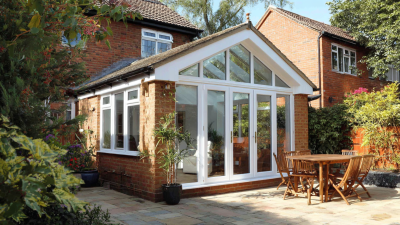
Aluminium French Door Pair of hinged leaves meeting at the centre, often with fixed side panels Terraces, balconies, conservatories, apartments and traditional-style façades Approximately 0.7–1.0 m wide × 2.1–2.6 m high per leaf About 1.3–2.3 W/m²·K with thermal-break frames and insulated glass Generally high when fitted with multi-point locking and continuous gaskets; commonly Class 3–4 air and 5A–9A water US$450–1,000/m² Good ventilation, familiar operation, attractive symmetry and effective security options Requires swing clearance and generally offers a smaller opening than bifold systems Residential projects needing a balanced combination of cost, ventilation and appearance
Aluminium Commercial Entrance Door Single or double leaf with closer, panic hardware, access control or automatic operator Retail, offices, schools, hospitals, public buildings and high-traffic entrances Approximately 0.9–1.4 m wide × 2.1–3.0 m high per leaf About 1.6–3.0 W/m²·K, depending on frame depth, glazing and thermal-break design Prioritizes durability and safety; tested air, water and wind ratings vary widely by entrance system US$500–1,400/m², excluding advanced access-control equipment Durable hardware options, accessible thresholds, controlled entry and suitability for frequent use Thermal performance may be secondary to traffic durability; hardware selection strongly affects cost Commercial buildings where service life, accessibility and security are key requirements
Aluminium Thermal-Break Door A performance specification rather than an opening style; available as hinged, sliding or folding Cold climates, hot climates, energy-efficient buildings and projects with condensation concerns Depends on the selected opening style and system depth Approximately 1.0–2.0 W/m²·K with suitable glazing and insulated spacers Usually improved frame surface temperature and reduced condensation risk; complete-door testing remains essential US$550–1,800/m², depending on the opening type Reduces thermal bridging, improves indoor comfort and supports energy-code compliance Costs more than non-thermal-break framing and does not compensate for poor glass, seals or installation Buildings where heating, cooling, condensation control or energy certification matters

Notes for global buyers:

1 Maximum panel sizes are indicative planning ranges, not universal limits. Structural calculations must consider glass weight, wind load, frame dimensions, hardware capacity and local building codes.

2 U-values are approximate whole-door values in W/m²·K. Lower values indicate better thermal insulation. Actual results depend on frame depth, glazing, spacer, panel ratio and threshold design.

3 Air, water and wind classifications vary by test standard, door size and configuration. Buyers should request certified test reports for the complete door assembly rather than relying only on profile data.

4 Installed costs are broad 2026 international planning ranges in US dollars per square metre, generally excluding taxes, freight, unusual structural work, access-control systems and premium finishes. Regional labour, glass specification, order volume and certification requirements can significantly change the final price.

What Global Buyers Should Check Before Choosing Aluminium Doors

2026 Top Types of Aluminium Doors for Global Buyers

Global buyers can choose from sliding, folding, casement, lift-and-slide, and thermal-break aluminium doors. Each type suits a different building layout and climate. Sliding doors save space and frame wide views. Folding doors open larger wall sections, but their hinges and rollers need careful adjustment. Lift-and-slide systems feel smooth, though they usually require stronger installation support.

Before choosing, check the aluminium alloy, frame thickness, surface treatment, and thermal-break design. In hot regions, poor insulation can make interiors uncomfortable. In cold areas, condensation may appear around the glass. Coastal projects need corrosion-resistant finishes and reliable drainage paths. Ask for air, water, wind, and insulation test results. Do not rely only on attractive photos.

Glass selection matters too. Double glazing may suit moderate climates, while triple glazing can improve comfort in colder zones. Check the rollers, hinges, locks, seals, and replacement process.

A beautiful door becomes frustrating when one small part is unavailable. Confirm opening size, delivery protection, installation guidance, and warranty terms before payment. Local building requirements should also be reviewed by a qualified professional.

Tips: Touch the frame samples. Inspect corner joints. Test the lock several times. Ask who handles adjustments after installation. A common mistake is choosing the widest opening without checking structural support. I have seen specifications look impressive, yet drainage details were missing. That detail deserves another question.